Abstract
Background: Hepatitis B virus (HBV), Hepatitis C virus (HCV), and Human Immunodeficiency Virus (HIV) are major causes of chronic infections and significant public health challenges, particularly in sub-Saharan Africa. Co-infection of HIV with HBV or HCV leads to accelerated disease progression and increased morbidity. Women seeking abortion care represent a population at higher risk of exposure to these infections due to unsafe procedures and multiple sexual exposures. Aims to determine the prevalence and associated factors of HBV and HCV co-infection with HIV among women seeking abortion care at Dessie Comprehensive Specialized Hospital, Dessie, Ethiopia. A cross-sectional study was conducted from August to November 2025 among 146 women seeking abortion care. Socio-demographic, behavioral, and clinical data were collected using a structured questionnaire. Blood samples were tested for HBsAg, anti-HCV, and HIV antibodies using rapid tests confirmed by ELISA. Data were analyzed using SPSS version 25. Logistic regression was applied to identify risk factors, with a significance level of p < 0.05. Results: The overall prevalence of HBV, HCV, and HIV infections were 6.2%, 2.1%, and 3.4%, respectively. Co-infections were observed in 1.4% (HBV/HIV) and 0.7% (HCV/HIV) of participants. Multiple sexual partners (AOR = 4.5; 95% CI: 1.5–13.7), unsafe abortion history (AOR = 3.21; 95% CI: 1.12–9.17), and needle injury (AOR = 3.8; 95% CI: 1.08–10.21) were significantly associated with infection. Conclusion: HBV, HCV, and HIV infections remain prevalent among women seeking abortion care in Dessie. Strengthening routine screening, vaccination, and health education is recommended to prevent co-infection and improve maternal health.
Keywords
HBV, HCV, HIV, Co-infection, Abortion Care, Dessie, Ethiopia
1. Introduction
1.1. Background
Hepatitis B virus (HBV), Hepatitis C virus (HCV), and Human Immunodeficiency Virus (HIV) represent a syndetic trio of blood-borne pathogens. These viruses share critical transmission routes, predominantly sexual contact, parenteral exposure through contaminated needles or instruments, and vertical transmission from mother to child. Establishing chronic infection, these viruses collectively impose an overwhelming public health and clinical burden worldwide. The global crisis is staggering: approximately 296 million individuals live with chronic HBV and 58 million with chronic HCV infection, while an estimated 38 million people are affected by HIV
| [1] | World Health Organization. Global Hepatitis Report. Geneva: WHO; 2023. |
| [2] | UNAIDS. Global HIV & AIDS statistics - 2022 fact sheet. Geneva: UNAIDS; 2022. |
| [3] | CDC. HIV and Viral Hepatitis Co-infection. Atlanta: CDC; 2023. |
[1-3]
.
The clinical consequence of HIV co-infection with either HBV or HCV is severe. Immunodeficiency induced by HIV accelerates the natural history of the hepatitis infections, leading to significantly higher rates of HBV and HCV viral replication and increased liver inflammation. This expedited process drastically raises the risk of end-stage liver disease, including cirrhosis, liver failure, and hepatocellular carcinoma (HCC), substantially increasing all-cause mortality among co-infected individuals
.
In the context of Ethiopia, the burden remains substantial, characterized by an intermediate endemicity for HBV (prevalence estimated between 4–7%), HCV prevalence typically between 1–3%, and general population HIV prevalence around 2%
| [5] | Ethiopian Public Health Institute (EPHI). HIV/AIDS Epidemiological Update, Ethiopia. Addis Ababa: EPHI; 2021. |
[5]
.
Women seeking abortion care are an epidemiologically and socially vulnerable population. Their heightened risk for HBV, HCV, and HIV exposure is multi-factorial, stemming from a confluence of high-risk sexual behavior, potential exposure to multiple partners, and, critically, historical or current reliance on unsafe medical or traditional practices where non-sterile instruments are used
.
Given that these women are actively engaged in the reproductive health system, identifying and intervening in this specific high-risk cohort is a vital step toward a comprehensive strategy for reproductive and maternal health.
1.2. Statement of the Problem
Despite remarkable global progress in expanding access to prophylactic measures, such as the HBV vaccine, and effective treatment options for HIV (Antiretroviral Therapy) and HCV (Direct-Acting Antivirals), co-infections persist as a profound threat to women’s reproductive health and survival, particularly in resource-limited settings. The deadly synergy created by these viruses’ means that a lack of screening for one can undermine successful treatment for another. Current public health efforts often focus on routine antenatal care (ANC) screening, which may exclude women utilizing other sensitive reproductive health services, such as abortion care.
Dessie Comprehensive Specialized Hospital is a critical referral center for the South Wollo Zone, handling a significant volume of abortion and post-abortion care clients. Due to the inherent risk factors associated with this population, there is an urgent necessity to quantify the precise burden of these co-infections within this facility's catchment area. Currently, there is a distinct void of local epidemiological data detailing the prevalence, incidence, and specific behavioral or clinical determinants of HBV/HIV and HCV/HIV co-infection among women utilizing abortion services in Dessie. This data deficit severely hinders the ability of local health administrators and clinicians to formulate evidence-based, cost-effective screening policies allocate resources appropriately, and design targeted intervention strategies to interrupt the transmission cycle.
1.3. Significance of the Study
The findings derived from this research are expected to have multi-level practical and public health significance:
1) Policy and Planning: The study will provide local health authorities, including the Amhara Regional Health Bureau and Dessie Comprehensive Specialized Hospital, with crucial baseline data to justify the integration of mandatory HBV and HCV screening into routine abortion care services.
2) Clinical Management: By identifying the specific co-infection rates, the study will help clinicians optimize treatment protocols for HIV-positive patients, ensuring that appropriate antiviral regimens are selected that address both the retrovirus and the hepatitis virus simultaneously, thereby preventing treatment failure and severe liver outcomes.
3) Targeted Intervention: The identification of specific, high-prevalence risk factors (e.g., multiple sexual partners, unsafe abortion history) will allow for the development of focused, culturally sensitive health education and counseling messages tailored specifically for women utilizing reproductive health services.
4) Future Research: The results will serve as critical foundational data for future, larger-scale cohort studies, helping researchers track trends, evaluate the impact of intervention programs, and guide resource allocation throughout the region.
1.4. Objectives
General Objective: To assess the prevalence and associated factors of HBV and HCV co-infection with HIV among women seeking abortion care at Dessie Comprehensive Specialized Hospital, Dessie, Ethiopia.
Specific Objectives:
1) To determine the prevalence of HBV, HCV, and HIV infections among women seeking abortion care.
2) To identify factors associated with HBV, HCV, and HIV infections among the study population.
2. Literature Review
2.1. Global Overview
The global co-infection landscape underscores the challenge. It is estimated that 2.7 million people are co-infected with HBV/HIV, and 2.3 million are co-infected with HCV/HIV worldwide
.
In regions characterized by high rates of parenteral transmission, such as certain parts of Asia and Sub-Saharan Africa, co-infection prevalence is particularly high due to the viruses exploiting the same routes of entry. The presence of HIV infection leads to blunted immune responses to the hepatitis viruses, resulting in higher viral loads and significantly increased progression to severe liver disease compared to mono-infection
.
2.2. Sub-saharan Africa
Sub-Saharan Africa bears the highest burden of HIV globally, alongside a high prevalence of chronic HBV, classifying most regions as hyper-endemic or intermediate-endemic. HBV prevalence across the region ranges typically from 6% to 10%, HCV from 1–5%, and HIV from 3–12%, depending on the specific demographic and geographic area studied
.
This concentration of viruses leads to clinically relevant co-infection rates. For instance, studies conducted among reproductive-age women in countries like Nigeria and Kenya have reported co-infection rates in the range of 3–6%
.
These findings highlight the need to move beyond standard antenatal screening to include vulnerable, high-risk groups to capture the full scope of viral transmission.
2.3. Ethiopia
In Ethiopia, national and regional studies consistently place HBV prevalence among various cohorts (including blood donors, antenatal, and abortion care clients) within the range of 4%–7%, firmly establishing the country in the intermediate endemicity category. HCV prevalence is typically lower, fluctuating around 1%–3%
| [11] | WHO. Global Progress Report on HIV, Viral Hepatitis and STIs. Geneva: WHO; 2022. |
| [12] | Kebede T, Yilma G. High burden of viral hepatitis co-infection among women in high-risk areas of Gondar, Northwest Ethiopia. Int J Infect Dis. 2020; 25(1): 101–107.
https://doi.org/10.1016/j.ijid.2020.08.019 |
| [13] | Fantaye A, Teklu B. Systematic review and meta-analysis of hepatitis B and C virus seroprevalence in Ethiopia: implications for public health. BMC Public Health. 2023; 23(1): 150.
https://doi.org/10.1186/s12889-023-15024-w |
[11-13]
.
The co-infection rates with HIV nationally are generally reported to vary between 1% and 2%. Literature from different regions points to common risk factors such as history of unsafe procedures (including traditional practices and unsterile medical/dental interventions), multiple sexual partners, and history of blood transfusions as being critical drivers
| [14] | Zewdu M, Deribe K. Epidemiology of co-infection with HIV and viral hepatitis and associated risk factors among reproductive-age women in Addis Ababa, Ethiopia. PLoS One. 2018; 13(9): e0202998.
https://doi.org/10.1371/journal.pone.0202998 |
[14]
.
For example, a study in Bahir Dar highlighted specific vulnerabilities among women seeking reproductive health services, further validating the necessity of focusing on this cohort
| [15] | Alene K, Gizachew M. Seroprevalence of Hepatitis C virus and its risk factors among non-pregnant women in Bahir Dar, Northwest Ethiopia. BMC Gastroenterol. 2017; 17(1): 85.
https://doi.org/10.1186/s12876-017-0640-z |
[15]
.
According to the Ethiopia Ministry of Health (Reference 2020), the national HIV prevalence is 2%; however, the prevalence in this specific cohort is notably higher at 3.4%
| [16] | Ethiopia Ministry of Health. Ethiopia National HIV/AIDS In dicator Survey 2020: Key Findings. Addis Ababa: MoH; 2020. (Note: This specific title is often used for the 2016 EDHS or the EPHIA 2017-2018 reports which were published around 2020). |
| [17] | Adal M. Systematic review on HIV situation in Addis Ababa, Ethiopia. BMC Public Health. 2019 Nov 21; 9(1): 544.
https://doi.org/10.1186/s12889-019-7885-8 |
[16, 17]
.
3. Materials and Methods
3.1. Study Area and Design
A hospital-based cross-sectional study was conducted at Dessie Comprehensive Specialized Hospital (DCSH), located in Dessie town, South Wollo Zone, Amhara Region. DCSH is a major referral hospital, attracting patients from a broad catchment area. The study was executed over a four-month period, from August to November 2025.
3.2. Study Population
The study population consisted of women aged 18 years and above who were seeking medical care for induced or spontaneous abortion services at Dessie Comprehensive Specialized Hospital during the designated study period.
3.3. Sample Size and Sampling Technique
The final sample size (n = 146) was calculated using the single population proportion formula. The calculation assumed an estimated prevalence (P) of 4.4% (based on previous studies of similar populations), a 95% confidence level, a 5% margin of error, and an allowance for a 10% non-response rate. Participants were systematically selected from the target population arriving at the abortion care unit during the data collection period using systematic random sampling.
3.4. Data Collection Tools and Laboratory Methods
Data on socio-demographic factors (age, education, residence) and behavioral/clinical risk factors (history of multiple partners, prior unsafe abortion, needle injury) were collected using a carefully structured and pre-tested questionnaire.
For laboratory testing, five milliliters of venous blood were aseptically collected from each consenting participant. Serum was separated and tested sequentially. Screening for HBsAg (Hepatitis B surface antigen), anti-HCV (Hepatitis C virus antibody), and HIV antibodies was initially performed using commercially available rapid diagnostic test kits (RDTs). All reactive samples were then confirmed using the Enzyme-Linked Immunosorbent Assay (ELISA) method (Bio-Rad, USA) as per national guidelines to ensure high specificity and accuracy.
3.5. Data Analysis
Data collected were double-entered and validated using EpiData software before being exported to SPSS version 25 for statistical analysis. Descriptive statistics (frequencies, percentages, means, and standard deviations) were used to summarize the socio-demographic and prevalence data. Binary and multivariate logistic regression models were employed to assess the association between the dependent variables (infection status) and the independent risk factors. Variables with a $p$-value of less than $0.25$ in the binary analysis were carried forward to the multivariate model. An Adjusted Odds Ratio (AOR) with a 95% Confidence Interval (CI) was calculated, and a p-value of less than 0.05 was considered statistically significant.
3.6. Ethical Considerations
Formal ethical clearance and approval were secured from the Institutional Review Board (IRB) of Dessie Health Sciences College. Written, informed consent was obtained from every woman who agreed to participate in the study after a clear explanation of the study's objectives, procedures, and their right to withdraw at any time. All collected data and results were handled with strict confidentiality. Infected participants were referred to the hospital’s treatment and counseling centers for follow-up care.
4. Results
A total of 146 women were included in the study, achieving a perfect response rate of 100%. The mean age of the participants was 26.8 ± 6.5 years, indicating a concentration in the young reproductive age group.
4.1. Socio-demographic Characteristics
The majority of participants were concentrated in the 25–34 age group, and over two-thirds resided in urban areas. The participants were predominantly educated at a secondary level or higher.
Table 1. Socio-Demographic Characteristics of Women Seeking Abortion Care at Dessie Comprehensive Specialized Hospital.
Variable | Category | Frequency (n) | Percentage (%) |
Age group | 18–24 | 53 | 36.3 |
25–34 | 65 | 44.5 |
Age 35 | 28 | 19.2 |
Residence | Urban | 100 | 68.5 |
Rural | 46 | 31.5 |
Education | No formal | 22 | 15.1 |
Primary | 40 | 27.4 |
Secondary & above | 84 | 57.5 |
Total | | 146 | 100.0 |
4.2. Prevalence of HBV, HCV, and HIV
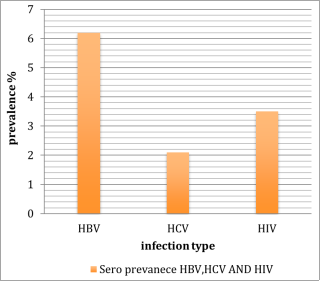
The serological analysis revealed a notable prevalence of all three viral infections among the participants. HBV was the most prevalent infection.
Table 2. Prevalence of HBV, HCV, HIV, and Co-infections Among Women Seeking Abortion Care at Dessie Comprehensive Specialized Hospital, Dessie, Ethiopia.
Infection | Reactive (n) | Prevalence (%) |
HBV (HBsAg positive) | 9 | 6.2 |
HCV (Anti-HCV positive) | 3 | 2.1 |
HIV (Antibody positive) | 5 | 3.4 |
HBV/HIV co-infection | 2 | 1.4 |
HCV/HIV co-infection | 1 | 0.7 |
Figure 1. Seroprevalence of HBV, HCV, and HIV Among Participants.
4.3. Risk Factors Associated with Infections
The multivariate logistic regression analysis demonstrated that several behavioral and clinical factors were significantly and independently associated with viral infection (HBV, HCV, or HIV).
Table 3. Factors Independently Associated with HBV, HCV, or HIV Infection (Multivariate Logistic Regression).
Risk Factor | Adjusted Odds Ratio (AOR) (95% CI) | P-value |
Multiple sexual partners | 4.5 (1.5–13.7) | 0.01 |
Unsafe abortion history | 3.21 (1.12–9.17) | 0.03 |
Needle injury | 3.8 (1.08–10.21) | 0.04 |
Low education level | 2.7 (1.01–6.82) | 0.05 |
5. Discussion
The findings of this study provide critical, facility-specific data on the burden of HBV, HCV, and HIV infections among women seeking abortion care at Dessie Comprehensive Specialized Hospital, confirming that this population is at elevated risk.
The observed HBV prevalence of 6.2% is consistent with the established range for Ethiopia (4%-7%)
| [11] | WHO. Global Progress Report on HIV, Viral Hepatitis and STIs. Geneva: WHO; 2022. |
| [13] | Fantaye A, Teklu B. Systematic review and meta-analysis of hepatitis B and C virus seroprevalence in Ethiopia: implications for public health. BMC Public Health. 2023; 23(1): 150.
https://doi.org/10.1186/s12889-023-15024-w |
[11, 13],
reinforcing the classification of Ethiopia as a country with intermediate endemicity. This rate is alarmingly high for a reproductive health cohort and indicates active transmission within the community. The HCV prevalence of 2.1% is also comparable to findings from similar regional studies in Bahir Dar (2%)
| [15] | Alene K, Gizachew M. Seroprevalence of Hepatitis C virus and its risk factors among non-pregnant women in Bahir Dar, Northwest Ethiopia. BMC Gastroenterol. 2017; 17(1): 85.
https://doi.org/10.1186/s12876-017-0640-z |
[15],
suggesting a consistent, albeit lower, burden of HCV compared to HBV.
The HIV prevalence of 3.4% in this specific cohort is notably higher than the most recent national average of (2%)
| [16] | Ethiopia Ministry of Health. Ethiopia National HIV/AIDS In dicator Survey 2020: Key Findings. Addis Ababa: MoH; 2020. (Note: This specific title is often used for the 2016 EDHS or the EPHIA 2017-2018 reports which were published around 2020). |
[16].
This difference strongly supports the hypothesis that women seeking abortion care are an epidemiologically high-risk group. This elevated prevalence directly correlates with the behavioral risk factor identified in our results: multiple sexual partners (AOR = 4.5). This shared transmission route between HIV, HBV, and HCV is the primary driver of the high co-infection burden observed.
The co-infection rates of HBV/HIV (1.4%) and HCV/HIV (0.7%) are clinically relevant. They align closely with co-infection rates reported across sub-Saharan Africa
The presence of these simultaneous infections dictates the need for integrated management protocols at Dessie Comprehensive Specialized Hospital. For HIV-positive individuals, co-infection accelerates the progression to severe liver fibrosis, requiring immediate and often complex adjustments to antiretroviral therapy (ART) that must also cover the hepatitis virus.
The significant associations found between infection status and multiple sexual partners (AOR = 4.5) and unsafe abortion history (AOR = 3.21) corroborate findings from other major Ethiopian cities like Gondar and Addis Ababa
| [12] | Kebede T, Yilma G. High burden of viral hepatitis co-infection among women in high-risk areas of Gondar, Northwest Ethiopia. Int J Infect Dis. 2020; 25(1): 101–107.
https://doi.org/10.1016/j.ijid.2020.08.019 |
| [14] | Zewdu M, Deribe K. Epidemiology of co-infection with HIV and viral hepatitis and associated risk factors among reproductive-age women in Addis Ababa, Ethiopia. PLoS One. 2018; 13(9): e0202998.
https://doi.org/10.1371/journal.pone.0202998 |
[12, 14].
The association with unsafe abortion history powerfully highlights the importance of the parenteral transmission route, emphasizing that the risk comes not only from sexual contact but also from exposure to non-sterile environments during medical procedures, particularly in contexts where safe abortion services may be inaccessible or delayed. Furthermore, the statistical link with needle injury (AOR = 3.8) underscores failures in standard infection control practices that could affect a broader spectrum of healthcare and traditional settings.
Finally, the marginal association with low education level (AOR = 2.7) implies that access to or comprehension of public health information regarding safe practices and disease prevention is a persistent barrier, requiring targeted health literacy interventions. The study confirms that women seeking abortion care are a crucial sentinel population for monitoring these blood-borne viral epidemics.
6. Conclusion
HBV, HCV, and HIV infections remain prevalent among women seeking abortion care in Dessie Comprehensive Specialized Hospital. The co-infection rates of 1.4% (HBV/HIV) and 0.7% (HCV/HIV) are clinically significant and necessitate immediate, integrated diagnostic and preventive strategies. The strongest risk factors identified-multiple sexual partners, unsafe abortion history, and needle injury-point towards high-risk behavior and inadequate infection control as the main drivers. Screening for HBV and HCV must be incorporated as a routine, mandatory component of abortion and reproductive health services to facilitate early diagnosis, counseling, and necessary referral for treatment and vaccination.
7. Recommendations
1) Health Authorities: Integrate HBV and HCV screening into routine maternal and reproductive health programs across the Amhara Region, specifically targeting high-risk populations like women seeking abortion care.
2) Hospitals: Systematically provide HBV vaccination for all women of reproductive age who test negative for HBsAg, utilizing the healthcare encounter as a critical opportunity for primary prevention. Furthermore, enhance and strictly enforce infection prevention and control (IPC) measures to eliminate the risk associated with needle injury.
3) Public Health: Strengthen health education campaigns focused on safe sexual practices (e.g., consistent and correct condom use) and the severe dangers of seeking or providing unsafe abortion procedures, improving general health literacy regarding blood-borne infections.
4) Further Research: Conduct larger, multicenter cohort studies across different Ethiopian regions to better understand the long-term outcomes and associated factors of viral co-infections among women of reproductive age.
Abbreviations
HBV | Hepatitis B Virus |
HCV | Hepatitis C Virus |
HIV | Human Immunodeficiency Virus |
HBsAg | Hepatitis B Surface Antigen |
Anti-HCV | Hepatitis C Virus Antibody |
HCC | Hepatocellular Carcinoma |
ANC | Antenatal Care |
DCSH | Dessie Comprehensive Specialized Hospital |
RDTs | Rapid Diagnostic Test kits |
ELISA | Enzyme-Linked Immunosorbent Assay |
SPSS | Statistical Package for the Social Sciences |
AOR | Adjusted Odds Ratio |
CI | Confidence Interval |
IRB | Institutional Review Board |
ART | Antiretroviral Therapy |
IPC | Infection Prevention and Control |
Acknowledgments
The authors sincerely express their gratitude to Dessie Health Sciences College for providing the necessary institutional support and to Dessie Comprehensive Specialized Hospital for facilitating the fieldwork. Special thanks are extended to all the participants for their invaluable cooperation and to the laboratory and data collection staff involved in the execution of this study.
Funding
The authors declared that they have received financial support for this study.
Conflicts of Interest
The authors declare no conflicts of interest.
References
| [1] |
World Health Organization. Global Hepatitis Report. Geneva: WHO; 2023.
|
| [2] |
UNAIDS. Global HIV & AIDS statistics - 2022 fact sheet. Geneva: UNAIDS; 2022.
|
| [3] |
CDC. HIV and Viral Hepatitis Co-infection. Atlanta: CDC; 2023.
|
| [4] |
Thio CL. Hepatitis B and human immunodeficiency virus co-infection. Hepatology. 2009; 49(S5): S138–S145.
https://doi.org/10.1002/hep.22915
|
| [5] |
Ethiopian Public Health Institute (EPHI). HIV/AIDS Epidemiological Update, Ethiopia. Addis Ababa: EPHI; 2021.
|
| [6] |
Mesfin M, Hailemariam T. Unsafe abortion and risk of viral hepatitis among women. Ethiop J Health Sci. 2022; 32(2): 187–194.
https://doi.org/10.4314/ejhs.v32i2.2
|
| [7] |
Smith S, Taylor M. Co-infection of HBV, HCV, and HIV in sub-Saharan Africa: A systematic review. J Infect Dis. 2019; 45(3): 123–130.
https://doi.org/10.1093/infdis/jiz007
|
| [8] |
Mwangi M, Okumu A, Nduati R, et al. Prevalence of HIV/HBV/HCV co-infection among pregnant women in Kenya. BMC Public Health. 2021; 21: 342.
https://doi.org/10.1186/s12889-021-10332-6
|
| [9] |
Tadesse F, Abate D. Seroprevalence of HBV and HCV among women in Northwest Ethiopia. BMC Infect Dis. 2021; 21: 134.
https://doi.org/10.1186/s12879-021-05837-7
|
| [10] |
Getachew A, Fentahun N. HIV and HBV co-infection among women seeking abortion care in Bahir Dar, Ethiopia. BMC Public Health. 2022; 22: 1203.
https://doi.org/10.1186/s12889-022-13271-7
|
| [11] |
WHO. Global Progress Report on HIV, Viral Hepatitis and STIs. Geneva: WHO; 2022.
|
| [12] |
Kebede T, Yilma G. High burden of viral hepatitis co-infection among women in high-risk areas of Gondar, Northwest Ethiopia. Int J Infect Dis. 2020; 25(1): 101–107.
https://doi.org/10.1016/j.ijid.2020.08.019
|
| [13] |
Fantaye A, Teklu B. Systematic review and meta-analysis of hepatitis B and C virus seroprevalence in Ethiopia: implications for public health. BMC Public Health. 2023; 23(1): 150.
https://doi.org/10.1186/s12889-023-15024-w
|
| [14] |
Zewdu M, Deribe K. Epidemiology of co-infection with HIV and viral hepatitis and associated risk factors among reproductive-age women in Addis Ababa, Ethiopia. PLoS One. 2018; 13(9): e0202998.
https://doi.org/10.1371/journal.pone.0202998
|
| [15] |
Alene K, Gizachew M. Seroprevalence of Hepatitis C virus and its risk factors among non-pregnant women in Bahir Dar, Northwest Ethiopia. BMC Gastroenterol. 2017; 17(1): 85.
https://doi.org/10.1186/s12876-017-0640-z
|
| [16] |
Ethiopia Ministry of Health. Ethiopia National HIV/AIDS In dicator Survey 2020: Key Findings. Addis Ababa: MoH; 2020. (Note: This specific title is often used for the 2016 EDHS or the EPHIA 2017-2018 reports which were published around 2020).
|
| [17] |
Adal M. Systematic review on HIV situation in Addis Ababa, Ethiopia. BMC Public Health. 2019 Nov 21; 9(1): 544.
https://doi.org/10.1186/s12889-019-7885-8
|
Cite This Article
-
APA Style
Ali, I. E., Awol, L. S. (2025). Prevalence of HBV and HCV Co-infection with HIV Among Women Seeking Abortion Care at Dessie Comprehensive Specialized Hospital, Dessie, Ethiopia. International Journal of Medical Research and Innovation, 2(1), 1-6. https://doi.org/10.11648/j.ijmri.20260201.11
 Copy
|
Copy
|
 Download
ACS Style
Ali, I. E.; Awol, L. S. Prevalence of HBV and HCV Co-infection with HIV Among Women Seeking Abortion Care at Dessie Comprehensive Specialized Hospital, Dessie, Ethiopia. Int. J. Med. Res. Innovation 2025, 2(1), 1-6. doi: 10.11648/j.ijmri.20260201.11
Copy
|
Download
AMA Style
Ali IE, Awol LS. Prevalence of HBV and HCV Co-infection with HIV Among Women Seeking Abortion Care at Dessie Comprehensive Specialized Hospital, Dessie, Ethiopia. Int J Med Res Innovation. 2025;2(1):1-6. doi: 10.11648/j.ijmri.20260201.11
Copy
|
Download
-
@article{10.11648/j.ijmri.20260201.11,
  author = {Ismail Ebrie Ali and Lubaba Sied Awol},
  title = {Prevalence of HBV and HCV Co-infection with HIV Among Women Seeking Abortion Care at Dessie Comprehensive Specialized Hospital, Dessie, Ethiopia},
  journal = {International Journal of Medical Research and Innovation},
  volume = {2},
  number = {1},
  pages = {1-6},
  doi = {10.11648/j.ijmri.20260201.11},
  url = {https://doi.org/10.11648/j.ijmri.20260201.11},
  eprint = {https://article.sciencepublishinggroup.com/pdf/10.11648.j.ijmri.20260201.11},
  abstract = {Background: Hepatitis B virus (HBV), Hepatitis C virus (HCV), and Human Immunodeficiency Virus (HIV) are major causes of chronic infections and significant public health challenges, particularly in sub-Saharan Africa. Co-infection of HIV with HBV or HCV leads to accelerated disease progression and increased morbidity. Women seeking abortion care represent a population at higher risk of exposure to these infections due to unsafe procedures and multiple sexual exposures. Aims to determine the prevalence and associated factors of HBV and HCV co-infection with HIV among women seeking abortion care at Dessie Comprehensive Specialized Hospital, Dessie, Ethiopia. A cross-sectional study was conducted from August to November 2025 among 146 women seeking abortion care. Socio-demographic, behavioral, and clinical data were collected using a structured questionnaire. Blood samples were tested for HBsAg, anti-HCV, and HIV antibodies using rapid tests confirmed by ELISA. Data were analyzed using SPSS version 25. Logistic regression was applied to identify risk factors, with a significance level of p < 0.05. Results: The overall prevalence of HBV, HCV, and HIV infections were 6.2%, 2.1%, and 3.4%, respectively. Co-infections were observed in 1.4% (HBV/HIV) and 0.7% (HCV/HIV) of participants. Multiple sexual partners (AOR = 4.5; 95% CI: 1.5–13.7), unsafe abortion history (AOR = 3.21; 95% CI: 1.12–9.17), and needle injury (AOR = 3.8; 95% CI: 1.08–10.21) were significantly associated with infection. Conclusion: HBV, HCV, and HIV infections remain prevalent among women seeking abortion care in Dessie. Strengthening routine screening, vaccination, and health education is recommended to prevent co-infection and improve maternal health.},
 year = {2025}
}
Copy
|
Download
-
TY  - JOUR
T1  - Prevalence of HBV and HCV Co-infection with HIV Among Women Seeking Abortion Care at Dessie Comprehensive Specialized Hospital, Dessie, Ethiopia
AU  - Ismail Ebrie Ali
AU  - Lubaba Sied Awol
Y1  - 2025/12/26
PY  - 2025
N1  - https://doi.org/10.11648/j.ijmri.20260201.11
DO  - 10.11648/j.ijmri.20260201.11
T2  - International Journal of Medical Research and Innovation
JF  - International Journal of Medical Research and Innovation
JO  - International Journal of Medical Research and Innovation
SP  - 1
EP  - 6
PB  - Science Publishing Group
SN  - 3070-6319
UR  - https://doi.org/10.11648/j.ijmri.20260201.11
AB  - Background: Hepatitis B virus (HBV), Hepatitis C virus (HCV), and Human Immunodeficiency Virus (HIV) are major causes of chronic infections and significant public health challenges, particularly in sub-Saharan Africa. Co-infection of HIV with HBV or HCV leads to accelerated disease progression and increased morbidity. Women seeking abortion care represent a population at higher risk of exposure to these infections due to unsafe procedures and multiple sexual exposures. Aims to determine the prevalence and associated factors of HBV and HCV co-infection with HIV among women seeking abortion care at Dessie Comprehensive Specialized Hospital, Dessie, Ethiopia. A cross-sectional study was conducted from August to November 2025 among 146 women seeking abortion care. Socio-demographic, behavioral, and clinical data were collected using a structured questionnaire. Blood samples were tested for HBsAg, anti-HCV, and HIV antibodies using rapid tests confirmed by ELISA. Data were analyzed using SPSS version 25. Logistic regression was applied to identify risk factors, with a significance level of p < 0.05. Results: The overall prevalence of HBV, HCV, and HIV infections were 6.2%, 2.1%, and 3.4%, respectively. Co-infections were observed in 1.4% (HBV/HIV) and 0.7% (HCV/HIV) of participants. Multiple sexual partners (AOR = 4.5; 95% CI: 1.5–13.7), unsafe abortion history (AOR = 3.21; 95% CI: 1.12–9.17), and needle injury (AOR = 3.8; 95% CI: 1.08–10.21) were significantly associated with infection. Conclusion: HBV, HCV, and HIV infections remain prevalent among women seeking abortion care in Dessie. Strengthening routine screening, vaccination, and health education is recommended to prevent co-infection and improve maternal health.
VL  - 2
IS  - 1
ER  -
Copy
|
Download





 Share This Article
 Twitter
 Linked In
 Facebook