Abstract
Condom utilization is a critical measure of the effectiveness of condom programming and is a key health outcome in assessing behavioral changes and progress in preventing human immunodeficiency virus and sexually transmitted infections among high-risk groups, particularly female sex workers. This study aimed to assess individual and institutional factors influencing condom utilization among female sex workers in Addis Ababa, Ethiopia. The objectives to assess condom utilization and identify associated factors among female sex workers in Addis Ababa, Ethiopia, 2024, to inform for preventing new HIV/STI infections. A methods used cross-sectional study design, supplemented with qualitative methods, was conducted in communities from September 15 to October 15, 2024. Out of 403 FSWs in Addis Ababa, was sampled using a snowball sampling technique, and data were collected through structured questionnaires. Data entry and completeness checks were performed using Epi Data version 3.1, and analysis was conducted using SPSS version 27. Binary and multivariable logistic regression models were used to identify factors significantly associated with condom utilization (p <0.05). Qualitative data were analyzed thematically and described indirect words. The results response rate was 97.5%, with 393 FSWs participating. The overall condom utilization rate was 77.2% (95% CI: 73.1%-81.2%), which is below the national expectation of 90%. Factors significantly associated with condom utilization included workplace (AOR=6.77, 95% CI=1.43-32.17), communication (AOR=0.06, 95% CI=0.01-0.24), condom use skills (AOR=0.16, 95% CI=0.04-0.73), consistent condom use (AOR=0.12, 95% CI=0.04-0.35), availability (AOR=0.21, 95% CI=0.06-0.73), and health service visits (AOR=0.09, 95% CI=0.02-0.41). Conclusions of the study revealed that condom utilization among FSWs in Addis Ababa is suboptimal level (77.2%) compared to the national target (90%). Key barriers included limited workplace access, poor condom communication, lack of condom use skills, sexual behavior, poor quantification, and stock interruptions contributed to low utilization. Strengthening peer-to-peer education, improving supply accessibility and availability, and enhancing monitoring are essential to promote consistent condom use and sustainability among target groups.
Keywords
Condom Utilization, FSW, Condom Use, Behavioral Factors, HIV/STI Prevention
1. Introduction
1.1. Background of the Study
Condom utilization is a critical intervention for reducing HIV/STI transmission among vulnerable populations, particularly female sex workers.
| [1] | HIV Prevention 2020 Road Map, 20 Avenue Appia1211 Geneva 27 Switzerland, 2020. |
[1]
Globally, HIV incidence is estimated at 12%, with Sub-Saharan Africa accounting for 15% of cases, while the rest of the world accounts for 9%. In 2021, key populations, representing less than 5% of the global population, contributed to 70% of new HIV infections.
| [2] | UNAIDS Global AIDS Update 2022, In Danger, 20 Avenue Appia1211 Geneva 27 Switzerland. |
[2]
.
Condom utilization is a key indicator of the effectiveness of condom programming. It reflects behavioral changes and progress in preventing HIV/STI exposure through unprotected sexual intercourse, especially among high-risk groups like FSWs. The condom program pathway, a theory of change, outlines the expected health outcomes from program interventions targeting high-risk populations. FSWs' exposure to health facilities and access to information are essential for driving behavioral changes.
| [1] | HIV Prevention 2020 Road Map, 20 Avenue Appia1211 Geneva 27 Switzerland, 2020. |
| [3] | UNAIDS 2023 Guidance, Global AIDS Monitoring 2024. |
[1, 3]
.
However, assessing condom utilization among FSWs reveals various challenges, including inconsistent and incorrect condom use, which increases the risk of HIV/STI transmission. Additionally, coordination gaps and inadequate resource distribution hinder the reach of condom programs to key and priority populations.
| [3] | UNAIDS 2023 Guidance, Global AIDS Monitoring 2024. |
| [4] | MOH, HIV/AIDS National Strategic Plan 2023/24 -2026/27, October 2023. |
[3, 4]
.
Without effective and sustainable condom availability and utilization, the global goal of ending AIDS by 2030 will remain unmet, and HIV/AIDS will continue to pose a public health threat.
| [1] | HIV Prevention 2020 Road Map, 20 Avenue Appia1211 Geneva 27 Switzerland, 2020. |
| [3] | UNAIDS 2023 Guidance, Global AIDS Monitoring 2024. |
[1, 3]
Addressing this requires research to identify priority problems, evaluate program progress, and assess factors affecting health outcomes, including resource utilization.
| [4] | MOH, HIV/AIDS National Strategic Plan 2023/24 -2026/27, October 2023. |
| [5] | Matthew Gray and J. Rob Bray 2019, the Australian Public Service Review Panel, An ANZSOG research paper March, 2019, https://www.anzsog.edu.au |
[4, 5]
.
In Ethiopia, the HIV prevalence among FSWs is 18.7%, with 95.3% of cases involving paying partners and 26.4% involving non-paying partners (IBBS, 2020).
| [4] | MOH, HIV/AIDS National Strategic Plan 2023/24 -2026/27, October 2023. |
[4]
Significant variations exist in HIV prevalence across geographic hotspots, particularly among key and priority populations. Studies show that inconsistent condom use among FSWs is 17.1%,
| [6] | Rametoet al. 2020, Prevalence and factors associated with inconsistent condom use among female sex workers in Ethiopia: findings from the national bio behavioral survey, BMC Public Health (2023) 23: 2407,
https://doi.org/10.1186/s12889-023-17253 |
[6]
far below the national target of 90% by 2027. This gap is attributed to individual and health facility-related factors, which will be assess in this study.
| [1] | HIV Prevention 2020 Road Map, 20 Avenue Appia1211 Geneva 27 Switzerland, 2020. |
| [2] | UNAIDS Global AIDS Update 2022, In Danger, 20 Avenue Appia1211 Geneva 27 Switzerland. |
| [4] | MOH, HIV/AIDS National Strategic Plan 2023/24 -2026/27, October 2023. |
[1, 2, 4]
.
In Addis Ababa, the HIV prevalence among FSWs is estimated at 15%. Studies indicate that both individual and institutional factors influence condom utilization among FSWs.
| [4] | MOH, HIV/AIDS National Strategic Plan 2023/24 -2026/27, October 2023. |
[4]
This study seeks to identify these factors using evidence-based approaches, understand the specific characteristics of FSWs, and address challenges to ensure effective condom utilization program interventions. Timely communication of findings with stakeholders will enhance health outcomes and service impact.
| [5] | Matthew Gray and J. Rob Bray 2019, the Australian Public Service Review Panel, An ANZSOG research paper March, 2019, https://www.anzsog.edu.au |
| [7] | Hamidreza Farrokh-Eslamlou, Mohamad Eslaml, Cyrus Alinia (2021), National Comprehensive Prep and condom programming strategy and implementation plan, 2022-2026. |
[5, 7]
.
1.2. Statement of the Problem
Despite free condom distribution targeting key priority populations (kPPs), significant gaps remain in reaching all target groups, particularly FSWs. According to national reports, condoms are distributed through free provision (59%), social marketing (40%), and private markets (1%). However, improper distribution affects accessibility, including cost and availability at suitable times and locations.
| [4] | MOH, HIV/AIDS National Strategic Plan 2023/24 -2026/27, October 2023. |
| [8] | Ethiopia National Condom Strategy 2019 – 2023. October 2018, |
[4, 8]
Complaints about condom availability have been raised by health facilities, professionals, and end-users (FSWs). The 2022 national condom report revealed that only 36% of male condoms were distributed, highlighting supply limitations and underestimation in quantification.
| [8] | Ethiopia National Condom Strategy 2019 – 2023. October 2018, |
[8]
These issues disrupt sustainable condom distribution and hinder efforts to reduce new HIV/STI infections.
| [4] | MOH, HIV/AIDS National Strategic Plan 2023/24 -2026/27, October 2023. |
| [9] | Joint United Nations Program on HIV/AIDS (UNAIDS), the condom needs estimation user guide, 20 Avenue Appia1211 Geneva 27 Switzerland+41 22 791 3666 2023. |
[4, 9]
.
Challenges in supplies chain interruption due to inadequate data generation from baseline health facilities are lacking to evidence condom distribution documentation, outlets for which key and priority population are addressed properly, and timely as issued by Integrated with Logistic Management Information System (LMIS) and stock monitoring. Thus it’s noted that the sustainability and continuity of condom supply is affected.
| [4] | MOH, HIV/AIDS National Strategic Plan 2023/24 -2026/27, October 2023. |
| [9] | Joint United Nations Program on HIV/AIDS (UNAIDS), the condom needs estimation user guide, 20 Avenue Appia1211 Geneva 27 Switzerland+41 22 791 3666 2023. |
[4, 9]
.
Individual factors of FSWs influence utilization of condom. Use of substance reduce self-decisions, lack of knowledge and information about HIV/STI, low perceived HIV risk, attitude and misconception towards condom have discomfort and reduce satisfaction, norm perceived related stigma and social acceptability, low self-efficiency fear of condom use, lack of condom use skill how to utilize the condom friendly management, difficult availability in working place and time, lack of money to afford, sexual characteristics, low addressed by peer educators and health seeking behavior. These risks of HIV acquisition have 30 times greater risk of acquiring HIV than adult women.
| [2] | UNAIDS Global AIDS Update 2022, In Danger, 20 Avenue Appia1211 Geneva 27 Switzerland. |
| [10] | Ryan Q. De Torres, Health Promotion Perspectives, Facilitators and barriers to condom use among Filipinos,
https://doi.org/10.34172/hpp.2020.49 2020, 10(4), 306-315. |
[2, 10]
.
Partner influence further complicates condom use. FSWs often have low risk perception with regular partners or boyfriends, lack negotiation skills, and face misinformation about condom use. Partner preferences, violence, economic dependence, and lack of sex education also reduce condom use. These factors critically hinder efforts to minimize HIV/STI.
| [6] | Rametoet al. 2020, Prevalence and factors associated with inconsistent condom use among female sex workers in Ethiopia: findings from the national bio behavioral survey, BMC Public Health (2023) 23: 2407,
https://doi.org/10.1186/s12889-023-17253 |
| [11] | Nabayinda et al. 2023, Factors Associated with Consistent Condom Use among Women Engaged in Sex Work: Lessons from the Kyaterekera Study in Southwestern Uganda AIDS Behav; available in PMC 2023; 27(3): 969-977.
https://doi.org/10.1007/s10461-022-03833-z March, 2023. |
[6, 11]
.
Another factor that prevented FSWs from using condoms is unfriendly service provision in health facilities. FSWs face institutional barriers in accessing sexual health and HIV prevention programs. According to studies, the designed program achieved 47.3% reported inconsistency in condom use compared to studies in Kenya.
| [12] | Roberts et al. (2020), Low program access despite high burden of sexual, structural, and reproductive health vulnerabilities among young women who sell sex in Mombasa, Kenya BMC Public Health (2020) 20: 806
https://doi.org/10.1186/s12889-020-08872-6 |
[12]
In Ethiopia, HIV/STI transmission primarily occurs through unprotected sexual intercourse due to individual factors.
| [4] | MOH, HIV/AIDS National Strategic Plan 2023/24 -2026/27, October 2023. |
| [10] | Ryan Q. De Torres, Health Promotion Perspectives, Facilitators and barriers to condom use among Filipinos,
https://doi.org/10.34172/hpp.2020.49 2020, 10(4), 306-315. |
[4, 10]
Despite condom use being fundamental to controlling transmission, low utilization among FSWs is slowing progress toward the global goal of ending AIDS by 2030.
| [2] | UNAIDS Global AIDS Update 2022, In Danger, 20 Avenue Appia1211 Geneva 27 Switzerland. |
| [12] | Roberts et al. (2020), Low program access despite high burden of sexual, structural, and reproductive health vulnerabilities among young women who sell sex in Mombasa, Kenya BMC Public Health (2020) 20: 806
https://doi.org/10.1186/s12889-020-08872-6 |
[2, 12]
.
This study aims to address these challenges by providing evidence-based insights into condom utilization among FSWs. The findings will inform decision-makers to evaluate the progress, improve condom utilization data to planning, accessibility, availability and service utilization. Then, contribute to reducing new HIV/STI infections.
| [6] | Rametoet al. 2020, Prevalence and factors associated with inconsistent condom use among female sex workers in Ethiopia: findings from the national bio behavioral survey, BMC Public Health (2023) 23: 2407,
https://doi.org/10.1186/s12889-023-17253 |
| [8] | Ethiopia National Condom Strategy 2019 – 2023. October 2018, |
| [13] | Amrita Tailor, MPH, Susan J. Robinson, PhD, MS-HCI (Ret.), Dyann M. Matson- Koffman, Dr PH, MPH, CHES, Maria Michaels, MBA, Matthew M. Burton, MD, and Ira M. Lubin, PhD, An Evaluation Framework for a Novel Process to Codevelop Written and Computable Guidelines, American College of Medical Quality 2023.
https://doi.org/10.1097/JMQ.0000000000000140 Vol. 38(5S) S35-S45. |
[6, 8, 13]
.
1.3. Significance of the Study
This study is significant due to the limited research on condom utilization among FSWs. It aims to assess individual and institutional factors influencing condom use among female sex workers in Addis Ababa. The purpose of this research is to identify condom utilization and the associated factors in a community. Its finding is hoped to point out how to improve the gap from evidence for decision makers, for planning and reducing institutional factors in accessing condom for HIV/STIs prevention programs intervention to female sex workers.
| [4] | MOH, HIV/AIDS National Strategic Plan 2023/24 -2026/27, October 2023. |
| [8] | Ethiopia National Condom Strategy 2019 – 2023. October 2018, |
[4, 8]
.
At the regional and national levels, this study will contribute to HIV/STI prevention and control programs. It will identify gaps in service delivery and community engagement, ultimately improving condom utilization and supporting national targets. These include reaching 95% of key and priority populations and reducing new HIV/STI infections to less than 1 per 10,000 people by 2027.
| [2] | UNAIDS Global AIDS Update 2022, In Danger, 20 Avenue Appia1211 Geneva 27 Switzerland. |
| [4] | MOH, HIV/AIDS National Strategic Plan 2023/24 -2026/27, October 2023. |
| [8] | Ethiopia National Condom Strategy 2019 – 2023. October 2018, |
[2, 4, 8]
.
The study general objective to assess condom utilization and identify associated factors among female sex workers in Addis Ababa, Ethiopia, 2024, to inform for preventing new HIV/STI infections. In specific objectives to determine the status, explore challenges and identify factors associated with condom utilization among FSWs in Addis Ababa.
2. Materials and Methods
2.1. Study Area and Period
The study was conducted in Addis Ababa, the capital city of Ethiopia, across 11 sub-cities. Data were collected from community hotspots, including drinking establishments, nightclubs, local drink houses, “khat” and “shisha” houses, street-based locations, trade routes, red-light districts, and the homes of female sex workers (FSWs). The study was conducted from September 15 to October 15, 2024.
2.2. Study Design
A cross-sectional study design, supplemented with qualitative methods, was conducted in community settings.
2.3. Population Source
Addis Ababa has an estimated population of 4,022,125 (2007 Census). The city comprises 11 sub-cities, 119 woredas, and 101 public health facilities. The target population included all FSWs and health professionals providing condom services at health facilities in Addis Ababa. The source population consisted of all female sex workers living in Addis Ababa city administration.
2.4. Sample Size
The sample size was estimated using a single population proportion (n= [z/2)2p(1-p)]/d2), the assumptions using p=50%p=50% (proportion of condom utilization among FSWs), zα/2=1.96zα/2=1.96 (95% confidence level), d=5%d=5% (margin of error), Non-response rate = 5% was considered in community research was done, finally total sample size = 403FSWs.
2.5. Inclusion and Exclusion Criteria
2.5.1. Inclusion Criteria
Female sex workers aged 18 years and above who agreed to participate in the study.
2.5.2. Exclusion Criteria
Female sex workers who were unwilling to participate, under the influence of substances at the time of the interview, or severely ill.
2.6. Sampling Technique Procedure
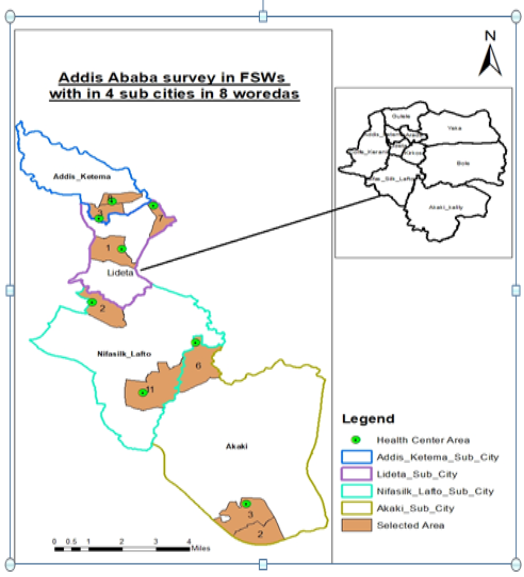
From the 11 sub-cities in Addis Ababa, four sub-cities were selected using random sampling. Two woredas were then chosen from each sub-city using the lottery method, with 50 or 51 participants proportionally allocated to each woreda. Study participants were selected using non-probability sampling (snowballing) technique employed because lack of recorded data by number and list of FSWs, that cannot be used as sampling frame
| [21] | AbayWoday. WossenChernet, Osman Ahmed. WoldemichaelTadesse. HIV/AIDS Preventive Practice and Associated Workers in Afar Region, Ethiopia: A Factors among Female Sex Community Based Study. Ethiop J Health Sci. 2020; 30(1): 45. https://doi.org/10.4314/ejhs.v30 i1.7 |
[21]
.
Quantitative data, First communicated with health center HIV/AIDS prevention focal, next selected sex worker participants as an index (seed) working with health centers, those who are trained peer educators supported by (Global Fund and CDC) the initial information was taken, then next participants chain referral way, fulfilling the inclusion criteria in the community.
| [21] | AbayWoday. WossenChernet, Osman Ahmed. WoldemichaelTadesse. HIV/AIDS Preventive Practice and Associated Workers in Afar Region, Ethiopia: A Factors among Female Sex Community Based Study. Ethiop J Health Sci. 2020; 30(1): 45. https://doi.org/10.4314/ejhs.v30 i1.7 |
| [31] | SaroAbdella, MeazaDemissie, AlemayehuWorku, MergaDheresa, and YemaneBerhane, HIV prevalence and associated factors among female sex workers in Ethiopia, east Africa, eClinicalMedicine2022; 51: 101540, Published online 1 July 2022 https://doi.org/10.1016/j. eclinm.2022.101540 |
[21, 31]
The study included FSWs from various settings or working area, such as bars, hotels, red-light houses, local drinking houses, street-based locations, “khat” and “shisha” houses, trade routes, and home-based settings. All FSWs were recruited to structured questionnaires in this way until the desired sample size satisfied.
Qualitative data, key informant interviews were conducted with HIV prevention program providers from selected woredas. Eight providers were purposively selected (two from each sub cities: Lideta, Addis Ketema, Nifas Silk Lafto, and Akaki Kaliti). Semi-structured questionnaires and field notes were used for data collection.
Figure 1. Samples Were taken Woredas Among FSWs in Addis Ababa, October 2024.
2.7. Variables
2.7.1. Dependent Variable
Condom utilization.
2.7.2. Independent Variable
Socio-demographic factors: Age, educational status, income, marital status, workplace, and substance use.
Individual and behavioral factors: HIV/STI-related knowledge, risk perception, attitudes, social norms, self-efficacy, condom-use skills, sexual behavior, and partner characteristics.
Institutional and service-related factors: Accessibility, availability, exposure to health services, and promotion.
2.8. Operational Definition and Measurements
Condom utilization: Condom used correctly and consistently with occasional/non-regular partner in the last sex act, to reduce the risk of HIV/STIs among FSWs.
Individual and behavioral condom utilization related factors: all factors are related to HIV/STIs-related knowledge, risk perception, attitudes, social norms, self-efficacy, condom-use skills, sexual and partner among FSWs.
.
Institutional and service condom utilization related factors: all factors are related to accessibility, availability, exposure to health service utilization, and promotion among FSWs.
.
Good condom utilization: respondents scoring ≥80% on a set of eight items condom utilization-related questions.
.
Poor condom utilization: respondents scoring <80% on a set of eight items condom utilization-related questions.
Level of behavioral and health service condom utilization among FSWs: using condoms towards occasional/non-regular partners in correctly and consistently. Good level respondents mean score and above, poor level below mean score.
Accessibility: The ability to obtain condoms from available sources.
| [7] | Hamidreza Farrokh-Eslamlou, Mohamad Eslaml, Cyrus Alinia (2021), National Comprehensive Prep and condom programming strategy and implementation plan, 2022-2026. |
[7]
.
Availability: The presence of condoms in stock at distribution points.
| [14] | UNAIDS 2020, Developing effective condom programmes, UNAIDS reference 2020. |
[14]
.
Health service utilization and promotion: measured by FSWs’ exposure to health services and messaging equal or more three times (≥3 times).
.
Peer educators: are recruited from a client group and trained to promote condom use, they are peers and understand the realities of clients lives, possess great credibility, are able to gain the confidence of potential clients, reduce suspicions and fears especially effective at reaching high-risk groups.
| [15] | UNFPA, Condom Programming for HIV Prevention an Operations Manual for Program Managers, Population Fund 220, East 42nd Street, New York, NY 10017, USA, ISBN 0-89714-733-2 www.unfpa.org |
[15]
.
Female Sex Workers: are women who regularly or occasionally exchange sex for money in various settings.
| [4] | MOH, HIV/AIDS National Strategic Plan 2023/24 -2026/27, October 2023. |
[4]
.
Condom: refers to both male and female condoms in this research document.
2.9. Data Collection Tool, Procedure and Process
The primary data collect from FSWs users and non-users of condom through structured questionnaires. A structured questionnaire was adapted from WHO and national guidelines with DHIS indicators, literature, and on UNAIDS evaluation guidelines.
The Procedure questionnaire was developed in English, translated into Amharic, and pretested in Lideta Sub-city (Abinet area) with 20 FSWs. Ten peer educators, well experienced and trained working with health centers, and one supervisor were trained in basic data collection techniques and client approach for data collection, all the data collectors hold grade 10/12 /diploma and one supervisor a graduate of a health a bachelor of science degree. Data were collected checked for reliability, validity, and supervised conducted daily checks to ensure accuracy and consistency.
2.10. Data Processing Analysis, Data Quality and Ethical Considerations
Quantitative data was collected manually, checked for completeness, edited, entered into Epi-data version 3.1 and exported into SPSS version 27 for analysis. Quantitative data were analyzed using SPSS version 27. Descriptive statistics summarized categorical variables, while binary logistic regression to identify factors significantly associated with condom utilization at p values of less than 0.01, and then conducted to multivariable logistic regression model, variables with p<0.05 were considered statistically significant. Qualitative data were analyzed thematically and described indirect words.
Model selection backward regression method used and normality tested using Kolmogorov-Smirnov and Shapiro-Wilk, and then confirm my observations from the histograms’ normally distributed. Goodness of fit assessed using Hosmer and Lemeshow test (p=0.94) and Multi-collinearity tested to check the predictors in the model correlated and about the response redundant information, with VIFs less than 1.6. The analysis focuses on independent variables, after analyzing the data a set of standard criteria adapted from UNAIDS, WHO and national condom guideline was used. The results taken from respondent mean level score of condom utilization.
Data quality was ensured through pretesting the questionnaire have attained reliable evidence through careful simple wording and evaluated by experts. For data collectors providing training in basic data collection techniques and client approach with timing collection of data (at 10 AM to 3 PM), daily limited the questionnaires supervision and review. In addition, reliability testing using Cronbach’s alpha got result (0.74, indicating good internal consistency) for individual, behavioral and institutional factors. It was acceptable reliability range.
Ethical clearance was confirmed from Yekatit 12 Medical College, department of Public Health ethical clearance committee. A formal letter that explains the objective and rationale and expected outcome of the study was wrote to the respective institution to Addis Ababa Health Bureau the ethical clearance was obtained from the ethical review committee (Ref No AA/3920/227, Date 09/01/17 E. C) then starts the data collection. The purpose and importance of the study was explained then informed consent obtained from each participant. Participants’ involvement in the study voluntary basis participants who were unwilling to participate in the study and those who wish to quit their participation at any stage was informed to do so without any restriction. Confidentiality of the information was assured through using questionnaire and keeping the data in secured place.
3. Results
Results were categorized into three themes considered the objectives (1) Overall the status level of condom utilization, (2) Challenges of condom utilization, and (3) Factors influence the condom utilization among female sex workers (FSWs). For qualitative data used key informants interviewed about FSWs that was the utilization of condom in health centers, challenges (face institutional barriers) and condom utilization related behavioral activities among FSWs. From the key informants had got information or evidence supported to quantitative data that point out under indirect words.
3.1. Socio-demographic Characteristics of FSWs
The study achieved a response rate of 97.5% (393 participants). The age of participants ranged from 18 to 41 years, with the majority (41.2%) falling within the 25–32 years age group. Regarding education, 58 (14.5%) had no formal education, 95(23.6%) could read and write, 53(13.2%) had completed grades 1–4, 97(24.1%) had completed grades 5–8, and 97(24.1%) had secondary education. Approximately 142(35.2%) of participants reported a monthly income of 6,001–9,000 ETB. In terms of marital status, 136(33.7%) were single, 26(6.5%) were married, 167(41.4%) were divorced or separated, and 73(18.1%) had boyfriends. The majority of participants 340(84.3%) reported substance use (alcohol and khat chewing), while 63(15.6%) were non-users. (See
Table 1 for details).
Table 1. Socio-Demographic Characteristics of the Study Participants FSWs in Addis Ababa, October 2024.
Variables | Category | Frequency | Percent (%) |
Age | 18-24 years | 78 | 19.4 |
25-32 years | 166 | 41.2 |
33-49 years | 123 | 30.5 |
>41 years | 36 | 8.9 |
Education | Illiterate | 58 | 14.5 |
Read and write | 95 | 23.6 |
1-4 grade | 53 | 13.2 |
5-8 grade | 97 | 24.1 |
9-12 grade | 97 | 24.1 |
Income (Monthly) | No response | 23 | 5.7 |
< 3000 ETB | 10 | 2.5 |
3001-6000 ETB | 98 | 24.3 |
6001-9000 ETB | 142 | 35.2 |
>9001 ETB | 126 | 31.3 |
Marital status | Single | 136 | 33.7 |
Married | 26 | 6.5 |
Divorcé | 94 | 23.3 |
Separate | 73 | 18.1 |
Have boy friends | 73 | 18.1 |
Working Place | Bar and Hotel | 72 | 17.9 |
Grocery | 52 | 12.9 |
Local drinking house' | 71 | 17.6 |
Night club | 77 | 19.1 |
Street based | 44 | 10.9 |
Home based | 87 | 21.6 |
Substances Use | No | 63 | 15.6 |
Alcohols | 124 | 30.8 |
Khat chewing | 40 | 9.9 |
Both alcohol and chat | 175 | 43.4 |
3.2. The Status of Condom Utilization Among Female Sex Workers
The overall condom utilization status level among 393 FSWs participants in the study was 303(77.2%) (95% CI: 73.1–81.2%) and based on operational criteria categorized under poor utilization of condom.
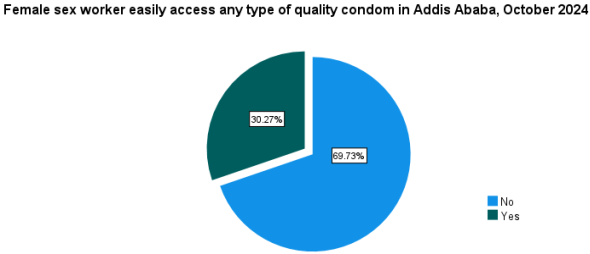
Condom utilizations among FSWs sexual characteristics, condom-use skills, accessibility, availability in their workplaces and health service visits for information have significantly associated (P< 0.05). Sexual characteristics of FSWs: sex without condom with regular partner /boyfriend 210(52.1%). Condom-use skills, 373(92.6%) knew how to use condoms properly. Only 122(30.27%) of participants reported easy access to quality condoms, while 266(66%) reported condom availability in their workplaces and 157(39.0%) easily accessed free male/female condoms in different outlets. In health service visits, 331(82.0%) had accessed information different types of condom, and 270(67%) visited health centers more than three times per year. (See
Table 2).
Table 2. Cross- Tabulation of Condom Utilization Among FSWs in Selected Variables, in Addis Ababa, October 2024.
Observed Variable | Status of condom utilization |
Poor utilizing condom (%) | Good utilizing condom (%) | Chi2(P- Value) |
Sexual characteristics, sex without condom with regular/boyfriend. |
No | 163 (84.0%) | 31 (16.0%) | 12.677(0.001) |
Yes | 144(68.9%) | 65 (31.1%) | |
Condom-use skills, knew how to use condoms properly. |
No | 12(48.0%) | 13(52.0%) | 11.663(0.002) |
Yes | 295(78.0%) | 83(22.0%) | |
Accessibility easily accessed any quality condoms. |
No | 204(72.6%) | 77(27.4%) | 6.559(0.011) |
Yes | 103(84.4%) | 19(15.6%) | |
Availability easily accessed free male/female condoms in different outlets. |
No | 195(79.9%) | 49(20.1%) | 4.765(0.032) |
Yes | 112(70.4%) | 47(29.6%) | |
Health service visits, had information different types of condom. |
No | 45(62.5%) | 27(37.5%) | 9.039(0. 004) |
Yes | 262(79.2%) | 69(20.8%) | |
3.3. Challenges in Condom Utilization in Health Centers Among FSWs
Challenges included poor integration of condom planning within the Logistic Management Information System (LMIS), low accessibility, and inconsistent availability.
Key informants highlighted issues such as:
This is described by my informant as “…We are issued condom every 2-3 months from EPSA and in every 15 days a request is made in selected service areas by RRF; but the number of condom is estimated from the previous consumption or stock, and not made on plan basis.” (HIV/AIDS prevention focal).
Supplies chain interruption also happened due to inadequate data generation and underestimated quantification of condom for distribution.
In the words of my informant this is stated as “…Almost all the health centers report according to their performance. Yet, the report data showed that plan verses achievement is low in the eyes of sub city given plan. This indicates that implementation suffered appropriate quantification.” (HIV/AIDS prevention focal).
The service of condoms distribution is provided in an unfriendly service provision in health facilities. FSWs face institutional barriers in accessing easily from outlet.
Again this is evidenced in the words of my informants who stated the situation as “…. Almost all health centers lack proper condom outlets due to fear of theft, making it difficult for FSWs to access condoms.” (HIV/AIDS Prevention Focal).
“….. Had there not been availability gap, Self-identified FSWs would have no fear of asking condom, but others who are not self-identified themselves may feel ashamed of asking for different reasons.” (HIV/AIDS prevention focal).
3.4. Factors Affecting Condom Utilization Among Female Sex Workers
3.4.1. Individual and Behavioral Factors
HIV/STI-related Knowledge factors, 323(80.1%) knew condoms prevent HIV/STIs, participated in discussion or training 330(81.90%), communicated about condom use with friends 387(95.9%), knowledge were about HIV/STIs Prevention 392(97.3%) and 287(71.2%) could identify expired condoms.
Risk Perception factors, 383(95.0%) knew sex without condoms increases HIV/STI risk, 336 (83.4%) understood the social and economic consequences, psychologically stressed 292(72.5%), perceived be infected to HIV/STIs 250(62.0%), and had sex act without condom takes the Prep and HIV testing 359 (89.0%).
Attitudes towards condom, 293(72.7%) felt comfortable using condoms, believed protected against HIV and other STIs 372(92.3%), could affect the muscles of the penis and vagina 138 (34.2%), but 74(18.4%) reported reduced satisfaction, and not trusted my partners 116 (28.8%).
A social norm of condom, 249(61.8%) always carried condoms, socially accepted 172 (42.7%) and 378 (93.90%) had a trend to visit health facilities.
Self-Efficacy, 281(69.7%) always used condoms, sexual partner had condom refused or not agreed 47(11.7%), partners refused to use increased high sexual satisfaction not agreed 132 (32.8%), felt reduced sexual pleasure not agreed 17(4.2%), and found it difficult to use condoms with regular partners not agreed and negotiated 235 (58.30%).
Condom-Use Skills, 373(92.6%) knew how to use condoms properly, in most recent clients applied consistently and it properly 361(89.6%), show partners how to use condoms 383(95.0%), needed free condoms 363(90.1%) and difficult to use condom the new type 244(60.5%).
Sexual related Sexual and partner behavior factors, almost the respondent were sexual engaged for money 288(71.50%) above one year, 268(66.5%) used condoms consistently, but 96(23.8%) had sex without condoms with non-regular partners and sex without condom with regular partner /boyfriend 210(52.1%).
3.4.2. Institutional and Service Utilization of Condom Related Factors Among FSWs
Accessibility of quality condom, only 122(30.27%) easily accessed quality condoms; participants who have an access to free condom 157(39.0%) and 264(65.5%) bought condoms from pharmacies and local distributors.
The information my informants provided to me, which reads as “…Unless program leaders arrange a free condom distribution, not all clients can’t afford condom; and they will be forced to pay 50 to 100 birr for a single condom. The worse option is may be having sex without condom.”(HIV/AIDS prevention focal).
Figure 2. FSWs Access Any Type of Condom in Addis Ababa, October 2024.
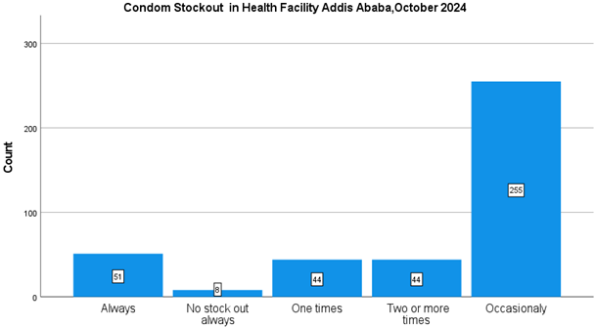
Availability of condom distribution channels out of health facilities in different areas, such as pharmacies, community-based (Jebilo), shop, DIC, and working place. The study finding was 266 (66%) reported condom availability in their workplaces, but 255 (63.3%) experienced occasional stock-outs. If the availability of free condom had interrupted, accept no sex without condom and negotiated with partners only 17(4.20%) the rest of participants responded 71(17.6%) freely sex act, and 315(78.2%) not sure.
From my informants, I may put it how it was narrated: “…When there is available stock, an average of 10-20 condoms are allocated for a month’s use to each FSW. However, this type of distribution is not grounded on any scientific study.”(HIV/AIDS prevention focal).
Figure 3. Condom Stock out in Health Centers Addis Ababa, October 2024.
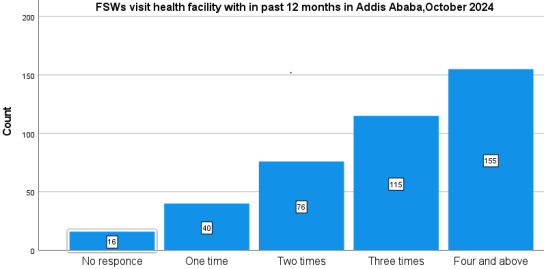
Regarding health service exposure, 270 (67%) visited health centers more than three times per year, 331(82.0%) had known different condom. And promotion about condom 102 (25.3%) of the FSWs received information’s utilization of condom from health centers, 113 (28.0%) from DICs, 128(31.8%) from peer educators. and other 54(13.50%) from different platforms.
Figure 4. FSWs Visits Health Facility in the Past 12 Months in Addis Ababa, October 2024.
3.5. Factors Associated with Condom Utilization Among Female Sex Workers, in Addis Ababa
In binary logistic regression analysis, in each independent variable socio demographic, behavioral and institutional health service were done. The results got such as income, working place, HIV/STI related knowledge, risk perception, attitude, self-efficacy, condom-use skills, sexual and partners, accessibility, availability and institution health service related factors were significantly associated (p<0.01). However, in multivariable logistic regression analysis workplaces access, communication, condom using skill, sexual behavior, availability and health facilities visited were significantly associated (p<0.05).
In multivariable logistic regression analysis was to determine factors that influence the utilization of condom. The study finding showed that FSWs with access to condoms in their workplaces were six times more likely to use condoms than those who had not access to prevent HIV/STIs (AOR=6.77, 95% CI =1.43-32.17).
Communication was one of indicator, current finding showed that FSWs who discussed condom use with friends were more likely to use condoms and saved from risk than those who are not communicated about condom (AOR=0.054, 95% CI=0.012-0.242). Condom using skill had FSWs and partners a more likely reducing the infection than those who had not skill (AOR=0.160, 95% CI=0.035-0.729). FSWs had good sexual behavior use condom consistently a more likely prevents from HIV/STIs than those who had bad sexual behavior (AOR=0.123, 95% CI =0.044-0.348).
In working areas condom availability had a good stock female sex workers were used constantly more likely to reduce infections than those who had not got condom. (AOR=0.207, 95% CI =0.058-0.731). In addition, 67% of the study finding shows that FSWs who visited health facilities were more likely to use condoms,, had a better health information about HIV/STIs and other medical service utilization than those who had not friendly health service utilized (AOR=0.083, 95% CI =0.017-0.411). (See
Table 3).
Table 3. Multivariable Logistic Regression Result on Condom Utilization, Among Female Sex Workers in Addis Ababa, Ethiopia. October 2024.
Observed Variables | Condom Utilization | Crude OR with 95% CI | Adjusted OR with 95%CI | P-Value |
No (% | Yes (%) |
Income (month) | | | | | |
No response | 22(5.5) | 1 (0.25) | 1 | 1 | |
≤ 3000 ETB | 107(26.8) | 19 (4.8) | 0.549(0.058,5.234) | 0.360(0.026,5.048) | |
3001-6000 ETB | 104(26.1) | 38(9.5) | 1.596(0.287,8.876) | 1.901(0.196,18.491) | |
6001-9000 ETB | 7(1.8) | 3(0.75) | 2.974(1.344,6.581)* | 0.335(0.107,1.044) | |
≥ 9001 ETB | 64(16.0) | 34(8.5) | 1.379(0.657,2.893) | 0.438(0.161,1.195) | |
Working place | | | | | |
Street | 68(16.9) | 9(2.2) | 1 | 1 | |
Grocery | 74(18.4) | 13(3.2) | 2.688(1.044,6.918) | 2.263(0.514,9.975) | |
Home based | 56(13.9) | 16(4.0) | 6.513(2.447,17.339)* | 0.846(0.187,3.827) | |
Bar and Hotel | 32(10.4) | 12(3.0) | 4.866(1.975,11.988)* | 0.758(0.200,2.876) | |
Local drinking house' | 46(11.4) | 25(6.2) | 1.418(0.498,4.038) | 6.771(1.425,32.165) | 0.016** |
Night club | 31(7.7) | 21(5.2) | 2.825(0.913,8.737) | 2.239(0.463,10,838) | |
Knowledge: Know HIV/STIs Prevention |
No | 303(98.7) | 4(1.3) | 7.407(4.230,12.070)* | 1.718(0.193,15.278) | |
Yes | 87(90.6) | 9(9.4) | 1 | 1 | |
Communication: Discussed condom use with friends |
No | 280(91.2) | 27(8.8) | 12.94(4.289,39.026)* | 0.054(0.012,0.242) | 0.001** |
Yes | 58(60.4) | 38(39.6) | 1 | 1 | |
Attitude: Condoms reduce satisfaction |
No | 290(99.0) | 3(1.0) | 0.447(0,250,0.800)* | 1.363(0.413,4.493) | |
Yes | 86(91.5) | 8(8.5) | 1 | 1 | |
Self-Efficacy: Always use condoms |
No | 297(95.5) | 14(4.5) | 0.074(0.011,0.487)* | 21.272(0.643,703.4) | |
Yes | 86(90.5) | 9(9.5) | 1 | 1 | |
Condom-Use Skills: Can show partners how to use condoms |
No | 273(90.7) | 28(9.3) | 3.072(1.612,5.856)* | 0.160(0.035,0.729) | 0.018** |
Yes | 49(51.6) | 46(48.4) | 1 | 1 | |
Sexual Characteristics: Consistent condom use |
No | 283(95.6) | 13(4.4) | 3.003(1.585,5.688)* | 0.123(0.044,0.348) | 0.001** |
Yes | 70(73.7) | 23(24.2) | 1 | 1 | |
Accessibility: Can afford to buy condoms |
No | 292(95.1) | 15(4.9) | 0.362(0.188,0.699)* | 0.532(0.150,1.883) | |
Yes | 77(81.1) | 18(18.9) | 1 | 1 | |
Availability: Condom stock-outs in the past 12 months |
No | 283(92.8) | 22(7.2) | 9.364(4.406,19.903)* | 0.207(0.058,0.731) | 0.014** |
Yes | 55(57.9) | 40(42.1) | 1 | 1 | |
Health Service Visits: Visited health facility in the past 12 months |
No | 286(93.5) | 20(6.5) | 7.603(3.093,18.688)* | 0.083(0.017,0.411) | 0.002** |
Yes | 74(77.1) | 22(22.9) | 1 | 1 | |
*Statistically significant in bivariate analysis; ** statistically significant in multivariate analysis; OR=1 is reference.
4. Discussion
This research aimed to determine condoms utilization among female sex workers in Addis Ababa, focusing on individual and institutional factors influencing their use. The study sought to address gaps in condom utilization, identify the current situation, and provide insights for prevention interventions to inform professionals, stakeholders, and decision-makers.
In this study overall the level of condom utilization among FSWs 77.2% in Addis Ababa, compared to national expectation 90%
| [4] | MOH, HIV/AIDS National Strategic Plan 2023/24 -2026/27, October 2023. |
[4]
the result is low level. Improved by increasing accessibility, availability, health service utilization, addressing the challenges, and reducing factors influence the condom utilization.
The proportion of accessibility from the study respondents showed only 30.3% of them easily accesses any type of quality condom. In addition, providing free condom for FSWs, the distribution outlet accessed 39.0% and 65.5%; others not accessing free condom could buy from pharmacy and local distributors. The finding showed lower than the national expectation target being addressed in the use.
| [4] | MOH, HIV/AIDS National Strategic Plan 2023/24 -2026/27, October 2023. |
[4]
The utilization of condom improves by setting proper access to health facilities and those who work in such areas reduce the risk of infection.
| [14] | UNAIDS 2020, Developing effective condom programmes, UNAIDS reference 2020. |
[14]
.
The availability of condom distribution is recommended to address equity the high risk group, whereby stakeholder’s involvement to strengthen the sustainability and work to reduce the transmission of HIV/STIs. From the study results 2.70% stock in health centers. The result showed that there is low level availability compared to South Africa studies 5%
| [17] | Beksinska M, Nkosi P, Mabude Z, Mantell JE, Zulu B, Milford C, et al. (2020) Lessons from the evaluation of the South African National Female Condom Programme. PLOSONE15(8): e0236984, August13, 2020,
https://doi.org/10.1371/journal.pone.0236984 |
[17]
. In Addis Ababa providers distributed based on stock, limited the number of free condoms provided 10-20 each for a month’s distribution. The study participants cannot afford around 17.6% sex without condom. The utilization will improve in monitoring the availability and involvements of stakeholders.
In health service exposure for utilization of condoms, to increase service visits they need friendly approaches and supply availability. The study showed that the participants have HIV/STIs service exposure per year more than three times 67%. The result is low level from expectation, priority populations exposures to interventions and messaging of 75%.
Based on the study result community addressing by primary health care service (PHC), there is low level contact for service utilization but better result from Kenya study 15.8%
| [12] | Roberts et al. (2020), Low program access despite high burden of sexual, structural, and reproductive health vulnerabilities among young women who sell sex in Mombasa, Kenya BMC Public Health (2020) 20: 806
https://doi.org/10.1186/s12889-020-08872-6 |
[12]
. In addition there are information 25.3% from health center, 28.0% DICs and 31.8% peer educators. Compared to South African study 15.4%
| [17] | Beksinska M, Nkosi P, Mabude Z, Mantell JE, Zulu B, Milford C, et al. (2020) Lessons from the evaluation of the South African National Female Condom Programme. PLOSONE15(8): e0236984, August13, 2020,
https://doi.org/10.1371/journal.pone.0236984 |
[17]
has fair awareness accessed in which area. To improve service utilization promotion, it is essential to make integration target specific approaches increasing accessibility, successful condom use interventions and strengthens peer to peer education in the working area with involvements of stakeholders.
| [10] | Ryan Q. De Torres, Health Promotion Perspectives, Facilitators and barriers to condom use among Filipinos,
https://doi.org/10.34172/hpp.2020.49 2020, 10(4), 306-315. |
| [18] | Ssenyonjo, Mistler, Adler, Shrestha, Kyambadde, Copenhagen, Examining HIV Knowledge and Sexually Risky Behaviors among Female Sex Workers in Kampala, Uganda. Int. J. Environ. Res. Public Health 2024, 21, 163.
https://doi.org/10.3390/ ijerph21020163 |
| [20] | William D. Evans, Alec Ulasevich, Megan Hathaway and BidiaDeperthes, Systematic Review of Peer-Reviewed Literature on Global Condom Promotion Programs, Int. J. Environ. Res. Public Health 2020, 17, 2262;
https://doi.org/10.3390/ijerph17072262 |
[10, 18, 20]
.
Individual and behavioral factors, such as age, education, income, workplace, substance use (alcohol and khat), knowledge, risk perception, attitude, social norms, self-efficacy, condom use skills, and partner characteristics, significantly influence condom utilization and health center visits.
| [19] | Mann Global Health: A Guide for Developing Strategic Operational Plans to Achieve Sustainable Increases in Condom Use, 2020.
https://mannglobalhealth.com/wp-content/uploads/2017/11/MGH_Condom-Landscaping-Report_Final_091117 |
| [20] | William D. Evans, Alec Ulasevich, Megan Hathaway and BidiaDeperthes, Systematic Review of Peer-Reviewed Literature on Global Condom Promotion Programs, Int. J. Environ. Res. Public Health 2020, 17, 2262;
https://doi.org/10.3390/ijerph17072262 |
| [21] | AbayWoday. WossenChernet, Osman Ahmed. WoldemichaelTadesse. HIV/AIDS Preventive Practice and Associated Workers in Afar Region, Ethiopia: A Factors among Female Sex Community Based Study. Ethiop J Health Sci. 2020; 30(1): 45. https://doi.org/10.4314/ejhs.v30 i1.7 |
| [22] | Amogneet al. (2022), Condom failure and pre‑exposure prophylaxis use experience among female sex workers in Ethiopia, BMC Public Health (2022) 22: 1079.
https://doi.org/10.1186/s12889-022-13468-3 |
| [23] | Mansi Malik, Siaa Girotra, Debolina Roy, Saurav Basu, Knowledge of HIV/AIDS and its determinants in India, Population Medicine, 2023, https://doi.org/10.18332/popmed/163113 |
[19-23]
Strengthening peer education, implementing targeted primary healthcare services, and ensuring free condom access in secure outlets are essential to reducing these gaps.
In health centers, condom distribution planning must be better integrated into the Logistic Management Information System (LMIS) to improve accessibility, availability, and user-friendly services. The study revealed low accessibility, limited stakeholder involvement in free condom distribution, and inconsistent stock availability at affordable prices. Poor quantification and stock-outs were major barriers.
| [9] | Joint United Nations Program on HIV/AIDS (UNAIDS), the condom needs estimation user guide, 20 Avenue Appia1211 Geneva 27 Switzerland+41 22 791 3666 2023. |
[9]
National condom strategy expectation targets aim for an 80% reduction in public-sector stock-outs, 50% coverage in urban bars and kiosks, and 75% health service exposure for priority populations.
Challenges include poor LMIS integration, weak stakeholder coordination, and service interruptions.
Addressing these issues requires improved stakeholder coordination, better LMIS integration at the health centers level, and increased stock availability. These measures will enhance sustainability, equitable distribution, and service integration with testing and PrEP programs.
| [12] | Roberts et al. (2020), Low program access despite high burden of sexual, structural, and reproductive health vulnerabilities among young women who sell sex in Mombasa, Kenya BMC Public Health (2020) 20: 806
https://doi.org/10.1186/s12889-020-08872-6 |
| [16] | Adal 2019, Systematic review on HIV situation in Addis Ababa, Ethiopia, BMC Public Health (2019) 19: 1544,
https://doi.org/10.1186/s12889-019-7885-8 |
[12, 16]
.
Increased condom access in workplaces significantly contributes to consistent use and HIV/STI prevention among FSWs. The study found that FSWs with workplace access were more likely to use condoms consistently than those without access. This finding aligns with the 2020 National Bio-Behavioral Survey,
| [6] | Rametoet al. 2020, Prevalence and factors associated with inconsistent condom use among female sex workers in Ethiopia: findings from the national bio behavioral survey, BMC Public Health (2023) 23: 2407,
https://doi.org/10.1186/s12889-023-17253 |
[6]
though Addis Ababa’s distribution outlets and stakeholder involvement differ from other cities. Strengthening community stakeholders and NGOs is crucial to improving condom utilization.
Communication with friends about condom use reduces infection risks and increases awareness of HIV/STI prevention. The study found that 95.9% of FSWs discussed condom use with friends, which correlated with higher prevention awareness and PrEP use. This is higher than the 47.3% reported in a Kenyan study,
| [12] | Roberts et al. (2020), Low program access despite high burden of sexual, structural, and reproductive health vulnerabilities among young women who sell sex in Mombasa, Kenya BMC Public Health (2020) 20: 806
https://doi.org/10.1186/s12889-020-08872-6 |
[12]
but further improvements can be achieved through targeted peer education. A study in Southwestern Uganda also highlighted the link between condom use communication and consistent use.
| [11] | Nabayinda et al. 2023, Factors Associated with Consistent Condom Use among Women Engaged in Sex Work: Lessons from the Kyaterekera Study in Southwestern Uganda AIDS Behav; available in PMC 2023; 27(3): 969-977.
https://doi.org/10.1007/s10461-022-03833-z March, 2023. |
[11]
.
Condom use skills are critical for reducing infections and unwanted pregnancies. The study found that 92.6% of FSWs knew how to use condoms properly, and 77.2% reported overall condom utilization, which is higher than findings in Bahir Dar 56.3%,
| [24] | AssefaMinwyelet, AddisuEngdaw: Condom Utilization and Associated Factors among Female Sex Workers in Bahir Dar, Ethiopia. International Journal of Science Technology and Society, (2020) Vol. 8, No. 5, 2020, pp. 123-131.
https://doi.org/10.11648/j.ijsts.20200805.14 |
[24]
In addition, 23.8% paying partner and 52.1% non-paying partner FSWs had inconsistent condom use, compared to the U.S. study inconsistent use was reported at 39.2% with paying partners higher results and 44.4% with non-paying partners had lower results.
| [26] | Michele R. Decker, JuNyeong Park, Sean T. Allen, Bradley Silberzahn, Katherine Footer, Steven Huettner, NoyaGalai, Susan G Sherman, Inconsistent condom use among female sex workers: Partner-specific influences of substance use, violence, and condom coercion AIDS Behav. Available in PMC 2023 April 26. |
[26]
Strengthening peer education and targeted primary healthcare interventions can further improve condom utilization.
Availability of condoms in workplaces is a key factor in consistent use. The study found that 66% of FSWs with workplace access used condoms consistently, reducing their risk of infection. This contrasts with findings from a 16 cities and town study in Ethiopia, where workplace access was lacking.
| [6] | Rametoet al. 2020, Prevalence and factors associated with inconsistent condom use among female sex workers in Ethiopia: findings from the national bio behavioral survey, BMC Public Health (2023) 23: 2407,
https://doi.org/10.1186/s12889-023-17253 |
[6]
Providing free condoms to high-risk groups, including FSWs, and involving gatekeepers and relevant sectors are essential to reducing HIV/STI transmission.
| [20] | William D. Evans, Alec Ulasevich, Megan Hathaway and BidiaDeperthes, Systematic Review of Peer-Reviewed Literature on Global Condom Promotion Programs, Int. J. Environ. Res. Public Health 2020, 17, 2262;
https://doi.org/10.3390/ijerph17072262 |
| [21] | AbayWoday. WossenChernet, Osman Ahmed. WoldemichaelTadesse. HIV/AIDS Preventive Practice and Associated Workers in Afar Region, Ethiopia: A Factors among Female Sex Community Based Study. Ethiop J Health Sci. 2020; 30(1): 45. https://doi.org/10.4314/ejhs.v30 i1.7 |
| [22] | Amogneet al. (2022), Condom failure and pre‑exposure prophylaxis use experience among female sex workers in Ethiopia, BMC Public Health (2022) 22: 1079.
https://doi.org/10.1186/s12889-022-13468-3 |
| [23] | Mansi Malik, Siaa Girotra, Debolina Roy, Saurav Basu, Knowledge of HIV/AIDS and its determinants in India, Population Medicine, 2023, https://doi.org/10.18332/popmed/163113 |
| [24] | AssefaMinwyelet, AddisuEngdaw: Condom Utilization and Associated Factors among Female Sex Workers in Bahir Dar, Ethiopia. International Journal of Science Technology and Society, (2020) Vol. 8, No. 5, 2020, pp. 123-131.
https://doi.org/10.11648/j.ijsts.20200805.14 |
| [25] | Banoet. al. Inconsistent condom use for prevention of HIV/STIs among street-based transgender sex workers in Lahore, Pakistan: socio-ecological analysis based on a qualitative study, BMC Public Health (2023) 23: 635
https://doi.org/10.1186/s12889-023-15550-w |
[20-25]
.
Health service visits also play a role in condom utilization. The study found that 67% of FSWs who visited health services regularly had better access to health information and condoms, reducing their risk of infection. This is lower than Kenyan studies, where 69%-87% of FSWs reported increased condom use after three or more visits.
| [29] | Manguroet al, Increased condom use among key populations using oral Prep in Kenya: results from large scale programmatic surveillance BMC Public Health (2022) 22: 304
https://doi.org/10.1186/s12889-022-12639-6 |
[29]
Barriers to friendly health services and institutional challenges may explain this difference. Improving accessibility, availability, and service integration is critical to addressing these gaps.
| [27] | Mahapatra B, Walia M, Patel SK, Battala M, Mukherjee S, Patel P, et al. (2020) Sustaining consistent condom use among female sex workers by addressing their vulnerabilities and strengthening community-led organizations in India. PLOS ONE 15(7): e0235094.
https://doi.org/10.1371/journal.pone.0235094 |
| [28] | Abrahim SA, Demissie M, Worku A, Dheresa M, Berhane Y. 2023. The effect of drop-in centers on access to HIV testing, case finding, and condom use among female sex workers in Addis Ababa, Ethiopia. PeerJ 11: e16144
https://doi.org/10.7717/peerj.16144 Published 17 October 2023. |
| [29] | Manguroet al, Increased condom use among key populations using oral Prep in Kenya: results from large scale programmatic surveillance BMC Public Health (2022) 22: 304
https://doi.org/10.1186/s12889-022-12639-6 |
| [30] | Elshiekhet al., Public Health Psychosocial determinants of consistent condom use among university students in Sudan: findings from a study using the Integrated Change Model, BMC (2023) 23: 578,
https://doi.org/10.1186/s12889-023-15466-5 |
| [31] | SaroAbdella, MeazaDemissie, AlemayehuWorku, MergaDheresa, and YemaneBerhane, HIV prevalence and associated factors among female sex workers in Ethiopia, east Africa, eClinicalMedicine2022; 51: 101540, Published online 1 July 2022 https://doi.org/10.1016/j. eclinm.2022.101540 |
[27-31]
.
Overall the study found that 23.8% of participants reported inconsistent condom use with occasional/non-regular partner, in the last sex act. Factors such as workplace access, communication, condom use skills, sexual behavior, accessibility and availability were significantly associated with increased condom utilization. The findings align with others studies showing that factors are critical for promoting condom use and access to health services.
However, the study limited focused exclusively on female sex workers (FSWs), excluding other key priority populations who are also significant condom users. This limits the generalizability of the findings to broader high-risk groups. The study relied on self-reported data, which may be subject to social desirability bias, potentially affecting the accuracy of condom utilization rates and related behaviors. And the study was conducted in Addis Ababa, which may not fully represent the condom utilization patterns and challenges faced by FSWs in other regions of Ethiopia. In addition, resource and time constraints limited the scope of the study, preventing a more in-depth exploration of certain factors influencing condom use.
5. Conclusion and Recommendation
5.1. Conclusion
Overall, the study findings show that condom utilization status level 77.2% compared to national expectation of condom utilization among FSWs (90%) poorly utilized. The study findings result level were poor utilization of condom. In terms of determinant factors associated with condom utilization workplace access, condom communication, condom use skills, sexual behavior, availability and health service visits.
The factors and challenges caused by low level of working place access, communication with friends, condom use skill, and sexual characteristics. In addition, poor integration of planning within Logistic Management Information System (LMIS) led to low quantification, poor coordination with other stakeholders, unfriendly users used due to stock interruption of condom and improper outlet to utilization.
To reduce the factors and challenges, it is necessary to strengthen target specific intervention, encouraging the peer to peer education, involve stakeholders, integration of plans given from Sub city with LMIS and increase stock availability.
In general, the utilization of condom will improve in monitoring the availability, equitably addressing free condom distribution to target groups (FSWs) in sustainable condition and involvements of stakeholders. Then, will have a positive change to condom use and reducing new HIV/STIs.
5.2. Recommendation
To ministry of health conduct supportive supervision using updated national condom strategy implementation guidelines and ensure the availability of resources and technical support for effective condom distribution and utilization programs.
To regional health bureau prioritize improving condom accessibility and availability by involving relevant stakeholders (NGOs, sectors, and CSOs), facilitate training on condom planning integrated with the Logistics Management Information System (LMIS), and conduct regular supportive supervision to monitor program implementation and address gaps.
To sub-city health offices facilitate training on condom planning integrated with LMIS, and conduct supportive supervision to ensure effective implementation at the local level.
To health centers ensure consistent condom availability and distribution by involving relevant stakeholders (NGOs, sectors, and gatekeepers), monitor condom stock levels to prevent stock-outs, integrate condom planning with LMIS for efficient resource management, develop secure and accessible condom distribution outlets, strengthen service integration by ensuring stock availability, adopting target-specific approaches in primary healthcare services (PHC), and promoting user-friendly services.
Abbreviations
AAHB | Addis Ababa Health Bureau |
AIDS | Acquired Immune Deficiency Syndrome |
ART | Anti-Retroviral Therapy |
CDC | Centers for Disease Control |
CSOs | Civil Society Organizations |
DHS | Demographic and Health Survey |
DIC | Drop in Center |
EDHS | Ethiopian Demographic and Health Survey |
EPHI | Ethiopian Public Health Institute |
EPSA | Ethiopian Pharmaceutical Supply Agency |
FSWs | Female Sex Workers |
HIV | Human Immune Virus |
IBBS | Integrated Biological and Behavioral Survey |
KII | Key Informant Interview |
KPPs | Key and Priority Population |
LMIS | Logistics Management Information System |
MOH | Ministry of Health |
NGOs | Non-Governmental Organizations |
PHC | Primary Health Care |
Prep | Pre Exposure Prophylaxis |
RRF | Requisition and Report Forms |
STIs | Sexually Transmitted Infections |
UNAIDS | Joint United Nations Program on AIDS |
WHO | World Health Organization |
Acknowledgments
I would like to thanks to all Yekatit 12 Hospital medical college public health department, AAHB and Lideta sub city health office providing this opportunity at regular time sponsorship and financial support. And selected sub cities (Lideta, Akaki Kality, Addis Ketema and Nifas Silik Lafto) HIV/AIDS prevention and control team leaders and health centers HIV/AIDS focal person’s necessary support, thereby contributing to the success of the data collection. I also extend my gratitude to all data collectors (peer educators), study participants for their willingness to participate in the study who shared their time and information, and who has been there by my side throughout the developing of this manuscript until finalized.
Author Contributions
Solomon Amare Getahun is the sole author. The author read and approved the final manuscript.
Fundig
The study was financially supported by Yekatit 12 Hospital Medical Colleges and Lideta sub city health office, however, had not their involvement in study design, data collection, and results analysis and in writing the manuscript.
Data Availability Statement
The data available in hard and soft copies any one wants original data and information request to the corresponding author through the email address.
Conflicts of Interest
The author declares no conflicts of interest.
References
| [1] |
HIV Prevention 2020 Road Map, 20 Avenue Appia1211 Geneva 27 Switzerland, 2020.
|
| [2] |
UNAIDS Global AIDS Update 2022, In Danger, 20 Avenue Appia1211 Geneva 27 Switzerland.
|
| [3] |
UNAIDS 2023 Guidance, Global AIDS Monitoring 2024.
|
| [4] |
MOH, HIV/AIDS National Strategic Plan 2023/24 -2026/27, October 2023.
|
| [5] |
Matthew Gray and J. Rob Bray 2019, the Australian Public Service Review Panel, An ANZSOG research paper March, 2019,
https://www.anzsog.edu.au
|
| [6] |
Rametoet al. 2020, Prevalence and factors associated with inconsistent condom use among female sex workers in Ethiopia: findings from the national bio behavioral survey, BMC Public Health (2023) 23: 2407,
https://doi.org/10.1186/s12889-023-17253
|
| [7] |
Hamidreza Farrokh-Eslamlou, Mohamad Eslaml, Cyrus Alinia (2021), National Comprehensive Prep and condom programming strategy and implementation plan, 2022-2026.
|
| [8] |
Ethiopia National Condom Strategy 2019 – 2023. October 2018,
|
| [9] |
Joint United Nations Program on HIV/AIDS (UNAIDS), the condom needs estimation user guide, 20 Avenue Appia1211 Geneva 27 Switzerland+41 22 791 3666 2023.
|
| [10] |
Ryan Q. De Torres, Health Promotion Perspectives, Facilitators and barriers to condom use among Filipinos,
https://doi.org/10.34172/hpp.2020.49 2020, 10(4), 306-315.
|
| [11] |
Nabayinda et al. 2023, Factors Associated with Consistent Condom Use among Women Engaged in Sex Work: Lessons from the Kyaterekera Study in Southwestern Uganda AIDS Behav; available in PMC 2023; 27(3): 969-977.
https://doi.org/10.1007/s10461-022-03833-z
March, 2023.
|
| [12] |
Roberts et al. (2020), Low program access despite high burden of sexual, structural, and reproductive health vulnerabilities among young women who sell sex in Mombasa, Kenya BMC Public Health (2020) 20: 806
https://doi.org/10.1186/s12889-020-08872-6
|
| [13] |
Amrita Tailor, MPH, Susan J. Robinson, PhD, MS-HCI (Ret.), Dyann M. Matson- Koffman, Dr PH, MPH, CHES, Maria Michaels, MBA, Matthew M. Burton, MD, and Ira M. Lubin, PhD, An Evaluation Framework for a Novel Process to Codevelop Written and Computable Guidelines, American College of Medical Quality 2023.
https://doi.org/10.1097/JMQ.0000000000000140
Vol. 38(5S) S35-S45.
|
| [14] |
UNAIDS 2020, Developing effective condom programmes, UNAIDS reference 2020.
|
| [15] |
UNFPA, Condom Programming for HIV Prevention an Operations Manual for Program Managers, Population Fund 220, East 42nd Street, New York, NY 10017, USA, ISBN 0-89714-733-2
www.unfpa.org
|
| [16] |
Adal 2019, Systematic review on HIV situation in Addis Ababa, Ethiopia, BMC Public Health (2019) 19: 1544,
https://doi.org/10.1186/s12889-019-7885-8
|
| [17] |
Beksinska M, Nkosi P, Mabude Z, Mantell JE, Zulu B, Milford C, et al. (2020) Lessons from the evaluation of the South African National Female Condom Programme. PLOSONE15(8): e0236984, August13, 2020,
https://doi.org/10.1371/journal.pone.0236984
|
| [18] |
Ssenyonjo, Mistler, Adler, Shrestha, Kyambadde, Copenhagen, Examining HIV Knowledge and Sexually Risky Behaviors among Female Sex Workers in Kampala, Uganda. Int. J. Environ. Res. Public Health 2024, 21, 163.
https://doi.org/10.3390/
ijerph21020163
|
| [19] |
Mann Global Health: A Guide for Developing Strategic Operational Plans to Achieve Sustainable Increases in Condom Use, 2020.
https://mannglobalhealth.com/wp-content/uploads/2017/11/MGH_Condom-Landscaping-Report_Final_091117
|
| [20] |
William D. Evans, Alec Ulasevich, Megan Hathaway and BidiaDeperthes, Systematic Review of Peer-Reviewed Literature on Global Condom Promotion Programs, Int. J. Environ. Res. Public Health 2020, 17, 2262;
https://doi.org/10.3390/ijerph17072262
|
| [21] |
AbayWoday. WossenChernet, Osman Ahmed. WoldemichaelTadesse. HIV/AIDS Preventive Practice and Associated Workers in Afar Region, Ethiopia: A Factors among Female Sex Community Based Study. Ethiop J Health Sci. 2020; 30(1): 45.
https://doi.org/10.4314/ejhs.v30
i1.7
|
| [22] |
Amogneet al. (2022), Condom failure and pre‑exposure prophylaxis use experience among female sex workers in Ethiopia, BMC Public Health (2022) 22: 1079.
https://doi.org/10.1186/s12889-022-13468-3
|
| [23] |
Mansi Malik, Siaa Girotra, Debolina Roy, Saurav Basu, Knowledge of HIV/AIDS and its determinants in India, Population Medicine, 2023,
https://doi.org/10.18332/popmed/163113
|
| [24] |
AssefaMinwyelet, AddisuEngdaw: Condom Utilization and Associated Factors among Female Sex Workers in Bahir Dar, Ethiopia. International Journal of Science Technology and Society, (2020) Vol. 8, No. 5, 2020, pp. 123-131.
https://doi.org/10.11648/j.ijsts.20200805.14
|
| [25] |
Banoet. al. Inconsistent condom use for prevention of HIV/STIs among street-based transgender sex workers in Lahore, Pakistan: socio-ecological analysis based on a qualitative study, BMC Public Health (2023) 23: 635
https://doi.org/10.1186/s12889-023-15550-w
|
| [26] |
Michele R. Decker, JuNyeong Park, Sean T. Allen, Bradley Silberzahn, Katherine Footer, Steven Huettner, NoyaGalai, Susan G Sherman, Inconsistent condom use among female sex workers: Partner-specific influences of substance use, violence, and condom coercion AIDS Behav. Available in PMC 2023 April 26.
|
| [27] |
Mahapatra B, Walia M, Patel SK, Battala M, Mukherjee S, Patel P, et al. (2020) Sustaining consistent condom use among female sex workers by addressing their vulnerabilities and strengthening community-led organizations in India. PLOS ONE 15(7): e0235094.
https://doi.org/10.1371/journal.pone.0235094
|
| [28] |
Abrahim SA, Demissie M, Worku A, Dheresa M, Berhane Y. 2023. The effect of drop-in centers on access to HIV testing, case finding, and condom use among female sex workers in Addis Ababa, Ethiopia. PeerJ 11: e16144
https://doi.org/10.7717/peerj.16144
Published 17 October 2023.
|
| [29] |
Manguroet al, Increased condom use among key populations using oral Prep in Kenya: results from large scale programmatic surveillance BMC Public Health (2022) 22: 304
https://doi.org/10.1186/s12889-022-12639-6
|
| [30] |
Elshiekhet al., Public Health Psychosocial determinants of consistent condom use among university students in Sudan: findings from a study using the Integrated Change Model, BMC (2023) 23: 578,
https://doi.org/10.1186/s12889-023-15466-5
|
| [31] |
SaroAbdella, MeazaDemissie, AlemayehuWorku, MergaDheresa, and YemaneBerhane, HIV prevalence and associated factors among female sex workers in Ethiopia, east Africa, eClinicalMedicine2022; 51: 101540, Published online 1 July 2022
https://doi.org/10.1016/j.
eclinm.2022.101540
|
Cite This Article
-
APA Style
Getahun, S. A. (2025). Condom Utilization and Associated Factors Among Female Sex Workers in Addis Ababa, Ethiopia: Community Based Cross-sectional Study. International Journal of Medical Research and Innovation, 1(1), 32-46. https://doi.org/10.11648/j.ijmri.20250101.15
 Copy
|
Copy
|
 Download
ACS Style
Getahun, S. A. Condom Utilization and Associated Factors Among Female Sex Workers in Addis Ababa, Ethiopia: Community Based Cross-sectional Study. Int. J. Med. Res. Innovation 2025, 1(1), 32-46. doi: 10.11648/j.ijmri.20250101.15
Copy
|
Download
AMA Style
Getahun SA. Condom Utilization and Associated Factors Among Female Sex Workers in Addis Ababa, Ethiopia: Community Based Cross-sectional Study. Int J Med Res Innovation. 2025;1(1):32-46. doi: 10.11648/j.ijmri.20250101.15
Copy
|
Download
-
@article{10.11648/j.ijmri.20250101.15,
  author = {Solomon Amare Getahun},
  title = {Condom Utilization and Associated Factors Among Female Sex Workers in Addis Ababa, Ethiopia: Community Based Cross-sectional Study},
  journal = {International Journal of Medical Research and Innovation},
  volume = {1},
  number = {1},
  pages = {32-46},
  doi = {10.11648/j.ijmri.20250101.15},
  url = {https://doi.org/10.11648/j.ijmri.20250101.15},
  eprint = {https://article.sciencepublishinggroup.com/pdf/10.11648.j.ijmri.20250101.15},
  abstract = {Condom utilization is a critical measure of the effectiveness of condom programming and is a key health outcome in assessing behavioral changes and progress in preventing human immunodeficiency virus and sexually transmitted infections among high-risk groups, particularly female sex workers. This study aimed to assess individual and institutional factors influencing condom utilization among female sex workers in Addis Ababa, Ethiopia. The objectives to assess condom utilization and identify associated factors among female sex workers in Addis Ababa, Ethiopia, 2024, to inform for preventing new HIV/STI infections. A methods used cross-sectional study design, supplemented with qualitative methods, was conducted in communities from September 15 to October 15, 2024. Out of 403 FSWs in Addis Ababa, was sampled using a snowball sampling technique, and data were collected through structured questionnaires. Data entry and completeness checks were performed using Epi Data version 3.1, and analysis was conducted using SPSS version 27. Binary and multivariable logistic regression models were used to identify factors significantly associated with condom utilization (p <0.05). Qualitative data were analyzed thematically and described indirect words. The results response rate was 97.5%, with 393 FSWs participating. The overall condom utilization rate was 77.2% (95% CI: 73.1%-81.2%), which is below the national expectation of 90%. Factors significantly associated with condom utilization included workplace (AOR=6.77, 95% CI=1.43-32.17), communication (AOR=0.06, 95% CI=0.01-0.24), condom use skills (AOR=0.16, 95% CI=0.04-0.73), consistent condom use (AOR=0.12, 95% CI=0.04-0.35), availability (AOR=0.21, 95% CI=0.06-0.73), and health service visits (AOR=0.09, 95% CI=0.02-0.41). Conclusions of the study revealed that condom utilization among FSWs in Addis Ababa is suboptimal level (77.2%) compared to the national target (90%). Key barriers included limited workplace access, poor condom communication, lack of condom use skills, sexual behavior, poor quantification, and stock interruptions contributed to low utilization. Strengthening peer-to-peer education, improving supply accessibility and availability, and enhancing monitoring are essential to promote consistent condom use and sustainability among target groups.},
 year = {2025}
}
Copy
|
Download
-
TY  - JOUR
T1  - Condom Utilization and Associated Factors Among Female Sex Workers in Addis Ababa, Ethiopia: Community Based Cross-sectional Study
AU  - Solomon Amare Getahun
Y1  - 2025/12/11
PY  - 2025
N1  - https://doi.org/10.11648/j.ijmri.20250101.15
DO  - 10.11648/j.ijmri.20250101.15
T2  - International Journal of Medical Research and Innovation
JF  - International Journal of Medical Research and Innovation
JO  - International Journal of Medical Research and Innovation
SP  - 32
EP  - 46
PB  - Science Publishing Group
SN  - 3070-6319
UR  - https://doi.org/10.11648/j.ijmri.20250101.15
AB  - Condom utilization is a critical measure of the effectiveness of condom programming and is a key health outcome in assessing behavioral changes and progress in preventing human immunodeficiency virus and sexually transmitted infections among high-risk groups, particularly female sex workers. This study aimed to assess individual and institutional factors influencing condom utilization among female sex workers in Addis Ababa, Ethiopia. The objectives to assess condom utilization and identify associated factors among female sex workers in Addis Ababa, Ethiopia, 2024, to inform for preventing new HIV/STI infections. A methods used cross-sectional study design, supplemented with qualitative methods, was conducted in communities from September 15 to October 15, 2024. Out of 403 FSWs in Addis Ababa, was sampled using a snowball sampling technique, and data were collected through structured questionnaires. Data entry and completeness checks were performed using Epi Data version 3.1, and analysis was conducted using SPSS version 27. Binary and multivariable logistic regression models were used to identify factors significantly associated with condom utilization (p <0.05). Qualitative data were analyzed thematically and described indirect words. The results response rate was 97.5%, with 393 FSWs participating. The overall condom utilization rate was 77.2% (95% CI: 73.1%-81.2%), which is below the national expectation of 90%. Factors significantly associated with condom utilization included workplace (AOR=6.77, 95% CI=1.43-32.17), communication (AOR=0.06, 95% CI=0.01-0.24), condom use skills (AOR=0.16, 95% CI=0.04-0.73), consistent condom use (AOR=0.12, 95% CI=0.04-0.35), availability (AOR=0.21, 95% CI=0.06-0.73), and health service visits (AOR=0.09, 95% CI=0.02-0.41). Conclusions of the study revealed that condom utilization among FSWs in Addis Ababa is suboptimal level (77.2%) compared to the national target (90%). Key barriers included limited workplace access, poor condom communication, lack of condom use skills, sexual behavior, poor quantification, and stock interruptions contributed to low utilization. Strengthening peer-to-peer education, improving supply accessibility and availability, and enhancing monitoring are essential to promote consistent condom use and sustainability among target groups.
VL  - 1
IS  - 1
ER  -
Copy
|
Download





 Share This Article
 Twitter
 Linked In
 Facebook